Listen to this article
Take the story with you. Choose a voice and a pace that suits you.
Or listen in another language / choose a voice
Getting your device voices ready…
The voice follows the displayed language and your browser’s regional preference when available. You can choose another narration voice.
The 2026 election policy ballot measures results tell a split story. On 3 November, voters decided 15 election policy-related statewide ballot measures, covering voter ID, same-day registration and the restoration of voting rights after a felony conviction. As of 9 November, voters had approved 10 measures, rejected four, and one result was too close to call. The candidate races swung one way. The rulebook questions swung several ways at once. Information verified through 15 November 2026.
The 2026 election policy ballot measures results: Nevada Question 7 voter ID approved, Ohio and North Carolina follow
Start with the headline: Nevada Question 7 voter ID approved, 62.2% to 37.9%, making Nevada the 37th state to require identification to vote in person and the 25th to require photo ID. Nevada had been one of 14 states with no ID requirement in most cases. In-person voters must now show photo ID — a driver’s licence, a state or federal ID card, a tribal ID. Mail voters must write the last four digits of their driver’s licence or Social Security number next to their signature, which also makes Nevada the 41st state to require an ID or ID number for absentee ballots.
Ohio and North Carolina wrote existing policy into their constitutions. Ohio’s amendment passed 65.3% to 34.7%, and North Carolina’s, requiring photo ID for all voters rather than only in-person voters, passed 59.6% to 40.4%.
Then the other half of the split. Arizona rejected Proposition 144 53.3% to 46.7%, California rejected Proposition 39 60.4% to 39.6%, and Colorado rejected Amendment 84 63.3% to 36.7%. Ballotpedia notes the three defeats in 2026 match the total number of voter ID measures defeated between 2004 and 2025. Voters weren’t rejecting ID in principle everywhere or embracing it everywhere. They were deciding state by state, and the map came out checkered.
Citizenship voting amendments 2026 passed everywhere they appeared
No checkering here. The citizenship voting amendments 2026 went five for five. Arkansas, Kansas, South Dakota and West Virginia approved constitutional amendments stating that only U.S. citizens can vote, taking the number of states with that explicit constitutional language to 22, and Alaska voters approved a statute to the same effect. Most of those 22 states added their prohibitions in the last three years.
The wider ballot told the same mixed story beyond election rules. Across roughly 40 states, voters weighed more than 140 statewide measures — and rejected some of the cycle’s loudest proposals, including California’s one-time 5% billionaire wealth tax.
Virginia felony voting rights restoration Question 3 and Massachusetts same-day voter registration Question 4
Two states widened the franchise. The Virginia felony voting rights restoration Question 3 passed 56.6% to 43.4%, making Virginia one of 40 states that restore voting rights at some point after a sentence is completed — and one of 24 that restore them on completion of the prison sentence itself. Restoration is now automatic; nobody has to petition a governor. Virginia had been one of eight states where regaining the vote required state action, and governors including Abigail Spanberger had been restoring rights case by case.
The Massachusetts same-day voter registration Question 4 passed 56.3% to 43.7%, making Massachusetts the 21st state with same-day registration when the policy takes effect on 1 January 2028. It is the first state to approve such a measure since Maryland and Michigan in 2018. The same Massachusetts electorate rejected top-two primaries 61% to 39% — easier registration, yes; a redesigned primary, no.
One result is still open. The measure to repeal Alaska’s ranked-choice and top-four primary system was failing 51.8% to 48.1% with 73% of precincts reporting as of 9 November. Locally, Longmont, Colorado approved ranked-choice voting for mayoral and council elections from 2029, becoming the 41st locality in the country to use or plan it, while Honolulu voters defeated an RCV measure outright.
Analysis: read together, the measures describe an electorate drawing a careful line — strict about who is eligible and how identity gets proven in some states, permissive about registration and second chances in others, sometimes in the same state on the same night. Party strategists will mine that for 2028. Election administrators have the plainer job: rewriting manuals, training poll workers, and making sure a constitutional sentence passed in November becomes a workable procedure before the next ballot is printed.
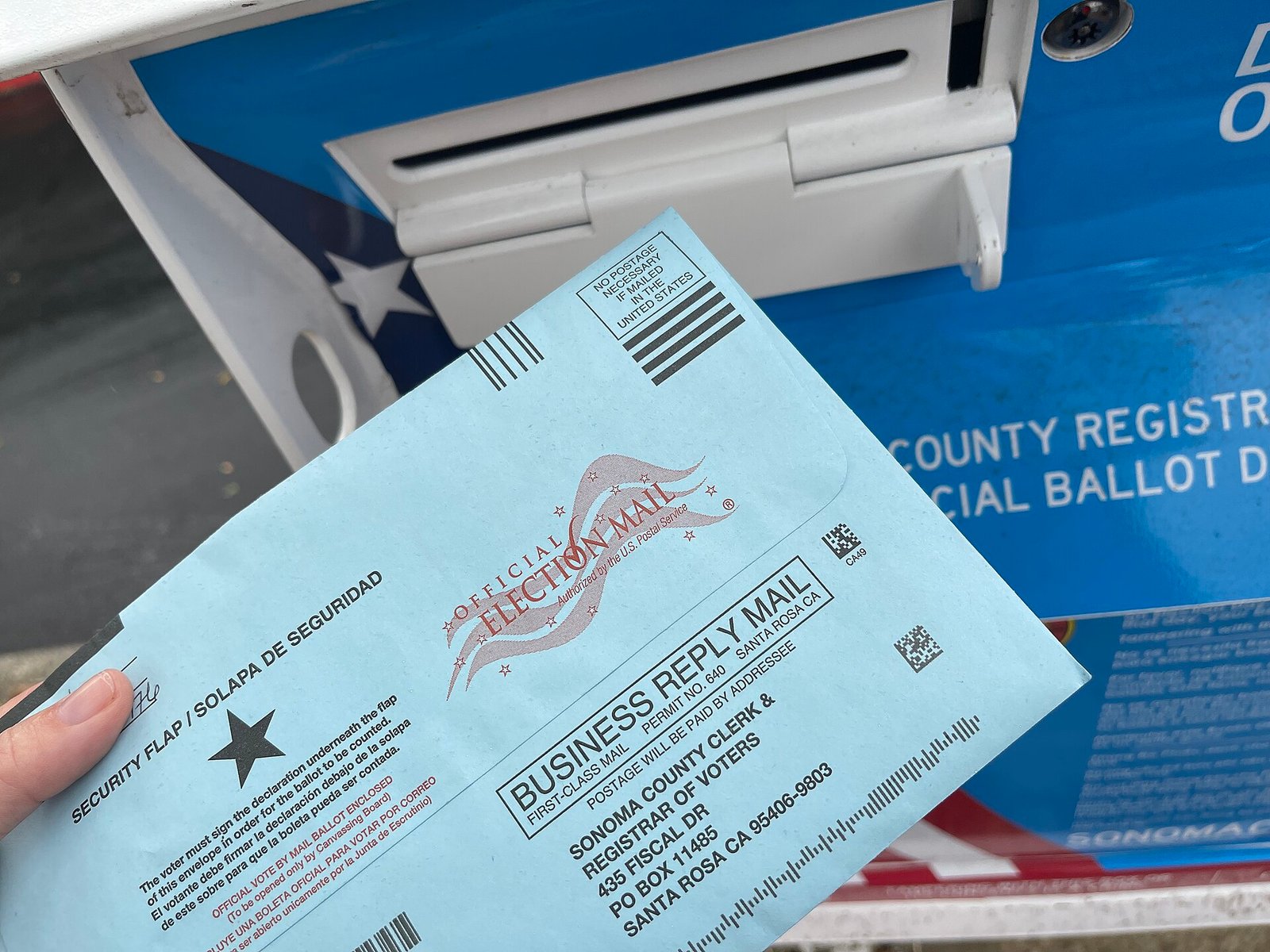
Photo: Sarah Stierch, via Wikimedia Commons (CC BY 4.0)
Sources
- https://news.ballotpedia.org/2026/11/10/voters-approve-10-election-policy-ballot-measures-on-voter-id-noncitizen-voting-and-more/
- https://ballotpedia.org/The_Ballot_Bulletin:_November_10,_2026
- https://political.org/2026/11/14/blue-wave-meets-ballot-box-surprises-as-voters-split-on-abortion-voter-id-and-billionaire-taxes/
Leave a comment
Comment as a guest and verify your email, or sign in or create a reader account. Guest comments reach our review queue after email verification; account holders can submit directly for review.