Listen to this article
Take the story with you. Choose a voice and a pace that suits you.
Or listen in another language / choose a voice
Getting your device voices ready…
The voice follows the displayed language and your browser’s regional preference when available. You can choose another narration voice.
China AI export controls model weights are the heart of a draft published on 16 October 2026: Beijing proposes that the weights, checkpoints and source code of its largest models should need a licence before they leave the country, while selling access to those same models through an app or an API would not count as an export at all (Legal 500 / Greenberg Traurig). Public comment closes on 15 November 2026. One part is already live: exporters must register listed technologies before export, and have had to since the day the draft appeared. Information verified through 7 November 2026.
The proposal — Announcement No. 48 of 2026, issued jointly by the Ministry of Commerce (MOFCOM) and the Ministry of Science and Technology (MOST) — would add 40 technologies to China’s Catalogue of Technologies Prohibited and Restricted from Export: 23 in AI, five in biomedicine and 12 in photovoltaics, with 14 proposed for prohibition and 26 for restriction (Akin).
China AI export controls model weights: the three thresholds
A large model crosses into the restricted tier if it meets any one of three tests: training compute of at least 10^26 floating-point operations, at least two trillion parameters, or a global top-10 ranking on specified public evaluations at the time of export (Legal 500 / Greenberg Traurig). What is controlled is the core: weights, key checkpoints, source code and related core technology — not the chat window (Akin).
The restricted list reaches beyond models. It covers specified AI agents, computing-cluster technology for clusters of more than 10,000 accelerator cards, certain AI chip design, AI-assisted vulnerability discovery, voiceprint recognition and translation technology meeting set thresholds (Akin).
The prohibited tier is narrower and sharper: AI-driven malicious-code generation and mutation technology, large models trained on China’s “core data” and used to provide services, high-performance agents intended for critical infrastructure, defence or core government systems, and specified deep-synthesis detection technology (Legal 500 / Greenberg Traurig).
What the China Announcement 48 AI technologies catalogue leaves outside
MOFCOM’s own explanation draws the boundary at delivery method. Access through an API, app, web interface or SaaS product, and lightweight on-device deployment, fall outside the large-model controls; other overseas local deployment of a restricted model, or moving its weights abroad, would need a technology-export licence (Legal 500 / Greenberg Traurig). Technology already public through open-source release or academic publication is excluded (Bad Signal).
There are proposed fast lanes too. Open-sourcing, a Chinese developer’s own overseas computing centres, overseas chip tape-out, joint research using overseas resources and international standards work are listed for automatic licensing or other facilitation — though the procedures are not yet defined (Legal 500 / Greenberg Traurig).
A ministry spokesperson described the scope as “precise and limited,” and said the vast majority of AI technologies would remain freely exportable (Bad Signal). That framing matters, because the draft plainly targets a thin top slice: frontier models, not everyday software.
China AI export registration October 2026: the part already in force
The catalogue additions are still a draft. The registration duty is not. Since 16 October, before exporting a listed technology, an exporter must register through MOFCOM’s Technology Trade Management Information application — including exports already under way but not completed (Legal 500 / Greenberg Traurig). Registration is triggered by transferring technology ownership abroad, licensing domestic technology for offshore use, or a change in the technology’s owner or actual controller to an offshore person (Akin).
Registration is a filing, not an approval, and exporters are expected to decide for themselves whether their technology is covered (Legal 500 / Greenberg Traurig). The same October package also revised dual-use controls on drones, tunnel boring machines and dredgers, effective 18 November, which sit under a separate legal regime from the technology catalogue (Akin).
The 2 trillion parameter AI model export licence China is proposing will be tested in the details lawyers are already flagging: broad exclusive licences that behave like ownership transfers, step-in and escrow clauses that could demand model weights later, and minority investments that shift actual control without a sale (Legal 500 / Greenberg Traurig).
Analysis: for years, export control over AI has mostly meant Washington controlling chips. This draft is Beijing controlling the trained artefact itself — and choosing, deliberately, to leave the service channel open. A foreign firm can keep calling a Chinese frontier model tomorrow. What it may soon need permission for is owning a copy. That distinction — access yes, possession licensed — is the policy, and it will shape how Chinese models are sold, hosted and bought long after the comment window closes on 15 November.
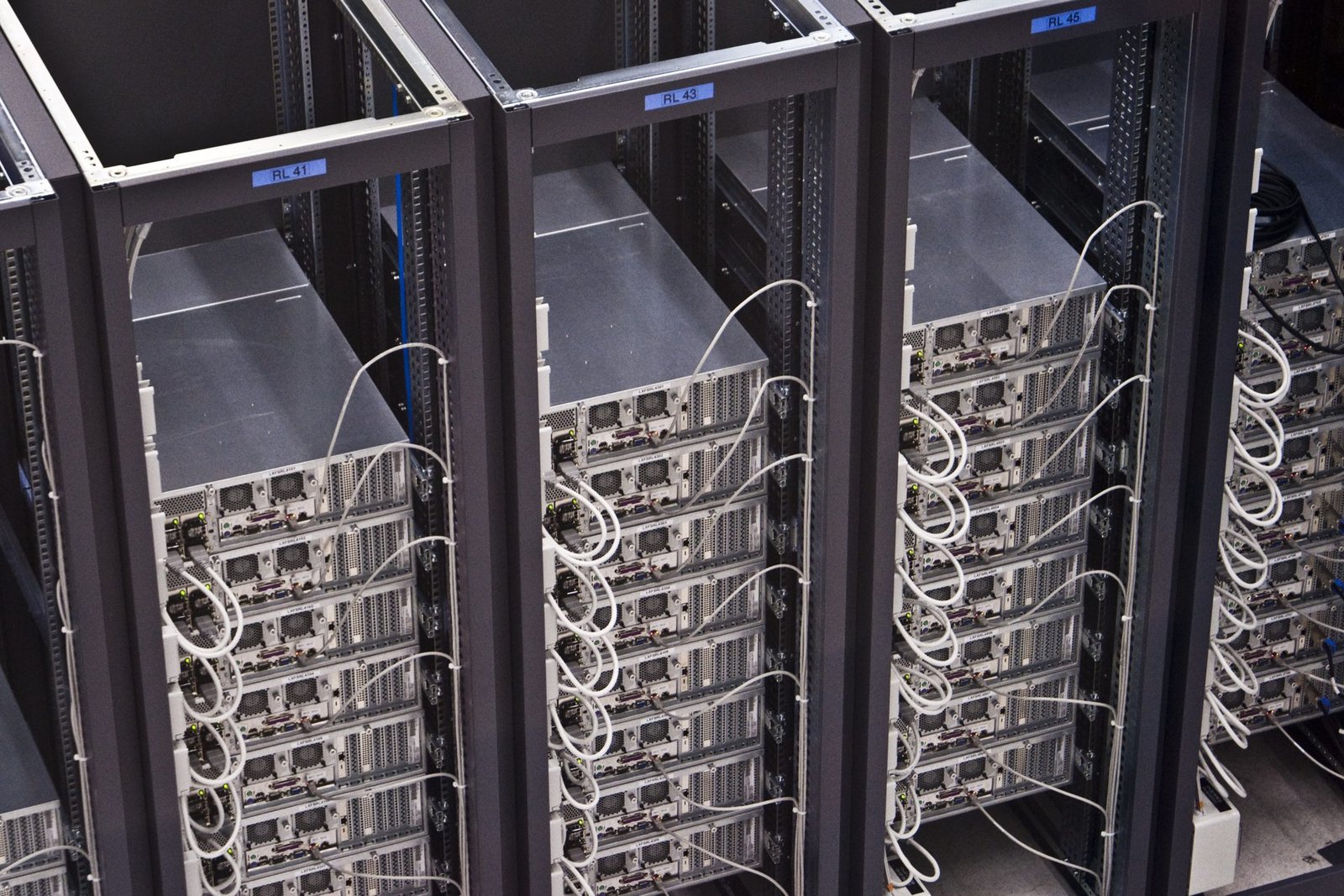
Photo: Florian Hirzinger, via Wikimedia Commons (CC BY-SA 3.0)
Sources
- https://www.legal500.com/intelligence/china/international-law/china’s-proposed-biopharma-and-ai-technology-export-controls-pre-export-registration-already-applies
- https://www.akingump.com/en/insights/alerts/new-chinese-export-control-measures-tighten-restrictions-on-the-export-of-advanced-technologies-and-dual-use-goods-strengthen-enforcement
- https://badsignal.ai/stories/china-ai-model-export-controls-draft
Leave a comment
Comment as a guest and verify your email, or sign in or create a reader account. Guest comments reach our review queue after email verification; account holders can submit directly for review.