Listen to this article
Take the story with you. Choose a voice and a pace that suits you.
Or listen in another language / choose a voice
Getting your device voices ready…
The voice follows the displayed language and your browser’s regional preference when available. You can choose another narration voice.
The Paris Hilton racist tapes are not a rumour, a smear or a fandom feud. They are recordings. In 2007, home videos taken from a storage locker she had stopped paying for were posted online, and in them the most famous heiress in the world can be heard using the n-word, an anti-gay slur and an antisemitic parody song, casually, at a party, on camera. Her publicist did not deny it. “It happened,” he said. “I’m not going to deny it happened.” What happened next is the real subject of this investigation: almost nothing. No career interruption, no lost empire, no lasting stain. Instead, across two decades, the record was denied where it could be denied, spun where it could be spun, re-routed through trauma where it could not be spun, and finally buried under one of the most successful rebrands in celebrity history. This investigation lays out the documented record, the allegations that remain allegations, her own words in response — all of them, in full — and asks what it means that a culture could watch the tapes, shrug, and hand her a redemption arc.
The documented record at a glance
- 2006: A Los Angeles court grants party planner Brian Quintana a restraining order after a contested hearing, following his claims — including that Hilton called him a “lazy Mexican”. The three-year order keeps her 100 yards away.
- 2007: The ParisExposed tapes surface: racial, homophobic and antisemitic slurs on video. Her publicist confirms the footage is real. Her first response is not an apology — it is a lawsuit to suppress the site. A boycott movement writes to her sponsor FILA; within months the site reopens in defiance of the court’s injunction.
- 2007: Paris Hilton jail: sentenced to 45 days for a probation violation, released to house arrest after roughly three days by the county sheriff, ordered back to jail by the judge the next day; 23 days served in total with credits.
- 2011: Neil Strauss’s book reports a 1999 conversation in which she says of Black men: “One percent is enough for me.” Her spokesperson calls it “absolutely untrue and ridiculous”. Lawyers are mentioned. No lawsuit follows.
- 2012: A cab recording captures her, aged 31, saying gay men are “disgusting” and “most of them probably have AIDS”. A publicist’s health-warning spin collapses against the audio; a full apology follows.
- 2017: A Marie Claire interview surfaces in which she dismisses Donald Trump’s accusers as women “trying to get attention and get fame”. She apologises — for the delivery, not to the women.
- 2020–2023: A self-produced documentary and a bestselling memoir reframe the record as the product of an abusive school system and PTSD. The slurs are answered with an explanation. The explanation is sincere. It is also the rebrand.
The platform: an heiress, not a self-made story
Every part of this story starts with the name. Paris Hilton is the great-granddaughter of Conrad Hilton, who founded Hilton Hotels in 1919 and built one of the defining American fortunes of the twentieth century. She did not inherit a business; she inherited a word — Hilton — that opened every door she ever walked through, and in 2001, while still a teenager on the New York party circuit, she was proclaimed the city’s leading “It Girl”. The Simple Life followed in 2003, and with it the era she came to define: famous for being famous, a celebrity whose product was her own proximity to money.
The money itself largely bypassed her, which makes the mythology more interesting, not less. Conrad Hilton left virtually everything to his foundation in 1979. In December 2007, her grandfather Barron Hilton announced he would do the same, giving 97 per cent of a net worth estimated at $2.3 billion to the Conrad N. Hilton Foundation, according to Reuters. Biographer Jerry Oppenheimer has claimed embarrassment at his granddaughter’s notoriety played a role; that is his claim, attributed, not established fact. What is documented is the structure: the fortune went to charity, the name went to Paris, and the name was worth more.
Hilton’s counter-claim is that she built everything herself. “I’m self-made,” she told The Sunday Times in 2025. “Like, I’ve done this all on my own. No one’s ever given me anything in my entire life.” She has made versions of the claim for years, and her business is real: a fragrance line launched in 2004, dozens of product lines, and since 2021 her company 11:11 Media, which she describes as valued at $1 billion. But the figures require a flag this investigation will keep visible. The fragrance line’s cumulative retail sales — reported at $2 billion by 2015 and $2.5 billion by 2017 — originate with the company and its licensing partners and have never been independently audited; brand-wide claims of $4 billion-plus in retail sales trace to her own company materials; the $1 billion valuation of 11:11 Media is her figure. None of this makes her a fraud. It makes her what she is: a genuinely hard-working heiress whose starting line was the finish line of everyone she is compared against, and whose empire, however energetically built, was built on a platform no work ethic can manufacture — a surname the whole planet already knew.
The many caricatures
One claim sits underneath the whole rebrand, and it deserves to be met before the record itself, because the record answers it. In 2020, promoting a documentary about her own life, Hilton announced: “This entire time I have been playing a character so the world has never truly known who I am. The real me is someone who is actually brilliant. I’m not a dumb blonde, I’m just really good at pretending to be one.” Notice the singular. A character. The record shows a wardrobe.
First, the heiress. The Simple Life, from 2003, built five seasons of comedy on a single mechanism: two rich young women, performing helplessness and horror, inside the homes and workplaces of ordinary families — the farm stays, the fast-food shifts, the jobs taken as novelty and abandoned as content. The performed cluelessness was the product; the people hosting it were the set. Hilton’s own account now concedes the performance: the dumb blonde was something she was “really good at pretending to be”. That is an admission of craft — a persona built, held and switched on at will. It is worth holding onto, because a craft is a choice, and choices are the one thing a character defence cannot dissolve.
Second, the costume. The era’s reality television treated other people’s identities as dressing-up material, and The Simple Life was no exception — though even here, the record will not sit still. Jezebel reported in 2020 that Hilton appeared in blackface on a season four episode of the show, at actor Sally Kirkland’s urging. TMZ’s contemporaneous 2007 account describes a different wearer: Kirkland herself, made up as Lionel Richie — blackface and an afro — in the season-five camp episodes, talked into it, TMZ’s sources said, by Nicole Richie. And Hilton, in a 2020 InStyle interview, described a related beat in her own words: Kirkland asked her and Richie to embody “two beautiful Black women” for an acting exercise; Hilton emerged from the makeup chair with her skin “several shades darker”, and laid it on the producers — “That was the producers… looking back now, I’m like, ‘That’s beyond.’ But it was what they were telling us to do on the show.” Three accounts, two wearers, two seasons, and one agreement underneath them: dark makeup on a white performer was, on somebody’s urging, a bit the format was willing to do. Her later memoir would bundle its reckoning with a “Sexy Pocahontas” Halloween costume — caricature as costume was not a single bad night; it was a genre she worked in.
Third comes the strand this investigation states as analysis, because it interprets a pattern rather than quoting a tape: the caricature she performed in Black company. In the hip-hop rooms her fame moved through, the act changed key — the slang, the “yo yo, word to the mother” posturing, Black culture worn as a social costume by a woman who, on the only unscripted record we have, reached for slurs about Black people the moment the room was private. By 2011 — the year of the Strauss denial — she was publicly discussing a musical collaboration with Lil Wayne, a fact raised at the time by commentator Zennie Abraham in the very video asking “Is Ms. Hilton a Racist?”. The performance was public. The contempt, where the record captures it, was private. That asymmetry is the argument: Analysis — a borrowed Blackness performed loudly, in public, where it bought access and cool; contempt expressed quietly, in private, where it cost nothing. She might as well have put the blackface on and said the word to their faces. She did not, and the reason she did not is the point: the boldness stopped precisely where consequences began.
Fourth, the baby voice — the breathy sex-kitten register of the red carpets, as constructed as any of the others. And fifth, the newest character: the survivor-author of 2020–2023, whose story is true and whose telling of it is also, unavoidably, a performance arranged for an audience — the one this investigation examines in full below.
Lay the wardrobe out and the defence inverts. A character is chosen for a room. The locker tapes were recorded in no room she was performing for; the cab was not a stage; the words behind the two men’s backs in 2004 were not dialogue. Across twenty years the characters rotate — heiress, costume, guest in Black culture, baby voice, survivor — and the one constant is what she said when no character was being performed at all. A wardrobe cannot alibi the unscripted record. It can only explain how many audiences were never shown it.
The Paris Hilton racist tapes: what is actually on them
In 2005, by most accounts, Hilton stopped paying for a storage locker. Its contents — passports, diaries, home videos, recorded phone calls, prescriptions, a fake ID — were auctioned, and in January 2007 they became ParisExposed.com, a subscription site charging $39.97 a month for access to her private archive. The Sydney Morning Herald, reporting contemporaneously on 5 February 2007, described what the most notorious clip showed: Paris and her sister Nicky dancing at a party, “drunkenly hurling racial epithets and homophobic insults”. The chain of title is set out in her own federal complaint, filed on 29 January 2007 and reported by The Smoking Gun: after the overdue bill, the storage facility sold the contents for approximately $2,775 to Nabil and Nabila Haniss — spelled Harniss in Page Six’s reporting — who sold them on to Bardia Persa for $10 million; Persa launched the site at $39.97 a month. Page Six separately reported that she had been offered her own archive back for more than $2 million. She and Joe Francis sued on privacy and copyright grounds. A temporary restraining order issued on 2 February 2007, and a preliminary injunction followed later that month — and in June 2007 the site reopened anyway, at $19.97 a month, in defiance of the injunction, its owner unrepresented and, per court reporting, unfindable. The case closed the way such cases close: injunction issued, settled in part, withdrawn in part. Note what the Herald’s report does not contain: any response, apology or denial from Hilton or her publicist about the remarks themselves. Her first move was legal suppression. The words were a privacy problem before they were ever treated as a moral one.
Newsweek’s later reconstruction, clip by clip, remains the clearest spine of the record. Dancing with Nicky to Notorious B.I.G.’s “Hypnotize”, Hilton leans into the camera and announces: “We’re like two niggers!” In another clip she describes someone at the party as a “fuckin’ hoodlum broke, poor bitch from, like, Compton. Public school bitch!” A male friend dancing with them is called “faggot”, repeatedly. And in footage Jezebel located in 2020 from the same archive, she sings a parody of Sister Sledge’s “We Are Family” with rewritten lyrics: “I am a fat ugly Jewish bitch / I’m a little jap-y Jew / I am a little Black whore, I get fucked in the butt for coke / I’m a nigger and I’m Black and I steal shit.” TMZ’s headline of 2 February 2007 asked the question the footage posed — “Paris the Bigot?” — before the post itself was scrubbed from the site. In the same era, The Simple Life aired a dark-makeup bit that the surviving accounts describe in conflicting ways — Jezebel’s version, TMZ’s version and Hilton’s own do not agree on who wore the makeup, in which season, or at whose urging. The conflict is set out in full in the caricatures section above.
When a response to the tapes finally came, it came from her publicist, Elliot Mintz, to Page Six, and it remains the most honest statement anyone in her camp ever made about them:
“I’m not going to make any attempt to spin this. It happened. I’m not going to deny it happened. Each of us has used words we have regretted later. This was six years ago. She was 20 at the time. It was New Year’s Eve. She had been obviously drinking. She sincerely regrets using those words. She is not a racist or an anti-Semite.”
Read it closely, because everything that followed for twenty years is a variation on it. The admission is real — the tapes were never denied, because they could not be. But even in candour there is machinery: the words are regretted, she is declared not a racist, and the arithmetic of excuse (six years ago, aged 20, New Year’s Eve, drinking) is laid out like a defence brief. The behaviour is conceded; the identity is protected. That distinction — the words were bad, the woman is not — is the template.
The response was not only defensive. That same month, the National Boycott of Paris Hilton Movement wrote to FILA demanding the clothing company cut its endorsement ties with her over what it called the “very horrendous and hurtful” slurs against Black people and gay people on the video — or face a boycott (Page Six, “TARGET: PARIS”, February 2007, preserved in a contemporary link roundup). The demand went nowhere. Remember that it was made: the culture did not lack for people saying, at the time and on the record, exactly what this was.
2004: the first denial, and the template it set
The tapes were not the beginning. On 30 September 2004, the New York Daily News’s Rush & Molloy column reported on a different videotape, never publicly released: the Daily Mail’s British reporter Carole Aye Maung said she had reviewed a 12-hour tape — first uncovered by Star magazine — of Hilton at a New York party with her friend Brandon Davis, in which Hilton was sweet to two Black men who asked her to model their fashion line — and then, once they had left, called them “dumb” followed by the n-word. “She’s being very, very sweet to them,” Maung said. “But she definitely uses the N-word. It’s so cruel, because they were so lovely, and she was being so lovely to them.” Mark Ebner’s 2009 book Six Degrees of Paris Hilton retold the same incident with the word rendered “dirty” instead of “dumb”; the footage itself has never surfaced, and this allegation stays where it belongs — alleged, single-source, unproven either way. Ebner’s version, covered by Richard Lawson in Gawker on 23 January 2009 (“Paris Hilton Is Basically a Racist Porn Star, Says New Book”), adds detail sourced to Darnell Riley, the convicted robber who had handled her stolen tapes: the two men approached Hilton and Davis at an MTV party to invite them to an event for singer Eve’s clothing line, numbers were exchanged, and afterwards, Riley claimed, Davis said “Stupid fucks”, “and Paris says ‘Dirty niggers’, and they start laughing”. Riley added that the words were clear despite a blur he said showed she had “tried to erase the tape”. The chain of attribution matters: a convicted extortionist’s account of a stolen tape, retailed by a hostile biographer, about a woman who said she had no idea who Riley was. It documents what was said about her, in print, for years. It is not proof of what she said.
What is documented is the response, because it is the first full performance of a denial template her camp would reuse for two decades. “Anyone who knows me knows that this is not me,” Hilton said in October 2004. “I am deeply hurt by recent reports. I am not a person who discriminates against anyone — ever.” Her Simple Life co-star Nicole Richie added support: “She doesn’t have a prejudiced bone in her body.” Note the structure, identical to the Mintz statement three years later and to every statement since: no engagement with the specific claim (her representatives would not even confirm or deny the word was used), an appeal to the testimony of friends, a declaration of identity in place of an account of behaviour. And note the coda: Davis, the friend standing beside her in that story, was himself quoted in the National Enquirer the same year describing her vocabulary from the inside: “She was forever using the n-word. I told her not to use it. It was offensive. But she just laughed. She is a racist, plus an idiot. Every Black person she referred to was a [n-word]… She puts down Jews and other minorities, too. And I’m Jewish… She is no longer my friend.” Davis was an ex-friend talking to a tabloid, and his account is weighted accordingly. But he was on the record, by name, in 2004 — three years before the locker tapes made the question unavoidable.
And the objection was not only personal. When Page Six ran the Davis quotes on 14 October 2004 under the headline “EX-PAL CALLS PARIS A ‘RACIST'”, it also carried Asa Khalif, president of the Philadelphia-based Racial Unity USA, saying his organisation had “not ruled out protests and boycotts once Hilton’s alleged comments are confirmed on tape”. The boycott threat was on the record in 2004, as it would be again in 2007. Both times, nothing landed.
“One percent is enough”: the allegation she denied and never sued over
In 2011, journalist Neil Strauss published Everyone Loves You When You’re Dead, a collection of interviews from his years as a music writer. One passage reports a conversation with Hilton in 1999, when she was 18. She tells him she went out with a man the previous night, and points to an actor in Saving Private Ryan — reported at the time as Vin Diesel:
“We were making out, but then we went somewhere where it was bright and I saw that he was black and made an excuse and left. I can’t stand black guys. I would never touch one. It’s gross.” Strauss asks how black a guy has to be. “One percent is enough for me.”
This is an allegation, and this investigation treats it as one: a single journalist’s account of a private conversation twelve years after the fact, in a book he was selling. It has never been corroborated by a recording. Hilton’s denial was immediate and total. Her spokesperson told the LA Times: “These allegations are absolutely untrue and ridiculous. We have sent these claims to Miss Hilton’s lawyers to respond further. It’s another example of someone making false claims for financial gain.” She later said she had never said anything like it in her life, and that she had never even met Strauss. What happened next is also part of the record: as BuzzFeed noted, the lawyers apparently never acted. Headlines in 2011 announced she “may sue over racist claim”; no lawsuit was ever filed — a suit in which, as a public figure, she would have had to prove the account false, under oath, in discovery. The denial stands. So does the silence after it. Readers can weigh both — including the hedge Strauss himself placed in front of the passage, in the book’s own introduction to her quotes: “Maybe she said what follows for provocation and shock value. Maybe she didn’t. You decide” (ABC News, 21 March 2011). The episode also produced the first draft of the script that would eventually replace denial altogether: Zennie Abraham, in a YouTube commentary titled “Paris Hilton: Is Ms. Hilton A Racist?” (29 March 2011), said he did not know whether Hilton was racist, but that “friends in two separate occasions point to examples where she has in the past” — before adding, “This is 2011. Paris Hilton’s grown up, she’s changed.” The redemption narrative was already written, nine years before the documentary that would sell it.
The Paris Hilton apology history: deny, spin, re-route, rebrand
Step back and the individual episodes resolve into a pattern with four moves, repeated in order of escalation. Where a claim has no recording, deny it completely (2004, 2011). Where a recording exists, suppress or spin it (the ParisExposed lawsuit; the 2012 health-warning statement). Where spin fails, apologise for the pain while protecting the identity (2012). And where the record is too large for any single apology, re-route the whole story through trauma and rebuild the brand on top of it (2020–2023). Each move is visible in the record. The last two deserve the closest reading.
2012: the cab recording, the collapsed spin, and the fullest apology
In September 2012, RadarOnline published audio recorded days earlier in a New York cab. Hilton, then 31 — not 20, not a teenager, a decade into global fame — was discussing gay men and the dating app Grindr with a gay friend: “Eww! Gay guys are the horniest people in the world. They’re disgusting. Dude, most of them probably have AIDS… I would be so scared if I were a gay guy. You’ll like, die of AIDS.”
Her spokesperson’s first response, to CNN and RadarOnline, was that her comments “were to express that it is dangerous for anyone to have unprotected sex that could lead to a life threatening disease” — and, in the fuller version, that the conversation had become heated after her friend told a story about a man with AIDS, and that the driver had released only part of the conversation. Set against the audio, which anyone could hear, the spin was untenable: she had not been warning anyone about anything. Within the same news cycle came the apology, carried by GLAAD, the fullest she has ever issued:
“As anyone close to me knows, I always have been and always will be a huge supporter of the gay community. I am so sorry and so upset that I caused pain to my gay friends, fans and their families with the comments heard this morning. I was having this private conversation with a friend of mine who is gay and our conversation was in no way towards the entire gay community. It is the last thing that I would ever want to do and I cannot put into words how much I wish I could take back every word. HIV/AIDS can hurt anyone, gay and straight, men and women. It’s something I take very seriously and should not have been thrown around in conversation. Gay people are the strongest and most inspiring people I know. It is so wrong when people bully or put down others for being gay. No one should have to go through that. Again, I am so sorry from the bottom of my heart and I feel absolutely horrible. I hope that everyone can accept my apology and know that it is not who I am or how I feel in any way.”
It is, on its face, a model celebrity apology: prompt, specific, sorrowful. It is also worth reading for what it does not contain. There is no account of why a woman who supports the gay community described gay men as disgusting disease-carriers when she believed she was unrecorded; there is the framing of a “private conversation” not meant for the community it described; and there is, again, the closing move from 2004 and 2007 — “it is not who I am”. The apology asks to be judged on the identity, not the recording. The story moved on within days. Her career did not flicker.
2016–2017: Trump, the accusers, and the apology that apologised for itself
In November 2016, days after the US election, Hilton told Australia’s The Project that she had voted for Donald Trump: “I’ve known him since I was a little girl, so yes.” Two days after that election she had also sat for an interview with Marie Claire journalist Irin Carmon, published in August 2017 — and when Carmon later published the fuller transcript, it showed Hilton discussing the women who had accused Trump of sexual assault: “I think that they are just trying to get attention and get fame. I feel like, a lot of people, when something happens all these opportunists will come out. They want to get money or get paid to not say anything or get a settlement when nothing really happened. So I don’t believe any of that. And I’m sure that they were trying to be with him too… Because a lot of women, I’ve seen, like him because he’s wealthy and he’s charming and good-looking so I feel like a lot of these girls just made the story up.” Of the Access Hollywood recording, in which Trump boasted of grabbing women: “I’ve heard guys say some pretty crazy things. Like, worse than that… So I definitely don’t think he would just say that.”
This from a woman who has described, in detail and credibly, what it is to be sexually violated and not believed — a contradiction the next section of this investigation takes seriously, because both things are true. Her statement of 17 August 2017 responded to the backlash:
“I want to apologize for my comments from an interview I did last year. They were part of a much larger story and I am regretful that they were not delivered in the way I had intended. I was speaking about my own experiences in life and the role of media and fame in our society and it was never my intention for my comments to be misapplied almost a year later. I always believe in helping women have their voices heard and helping create an environment where women feel empowered and believe in themselves. I am deeply hurt by how this has played out and also deeply sorry. Moving forward I will continue to do what I can to be an advocate for girls and women with the hopes of providing a louder voice for those who may desperately need it.”
As Jezebel and others noted at the time, the statement apologises for the delivery and the misapplication; it does not apologise to the accusers she had called fame-seeking opportunists, and it does not retract the claim that they made their stories up. And the Trump vote itself dissolved on inspection: in the same Marie Claire interview she had already acknowledged she had not actually voted, and her 2023 memoir completed the reversal — “When I was put on the spot in an interview, I pretended I voted for Donald Trump because he was an old family friend and owned the first modelling agency I signed with. The truth is even worse. I didn’t vote at all.” Loyalty performed on television, disowned in print, six years apart, each version delivered with total confidence to the audience in front of her.
2020–2023: the character, the documentary, and the memoir
The rebrand, when it came, was genuinely brilliant, and it began with a confession that doubled as an alibi. Promoting This Is Paris, the 2020 documentary she produced about her life, Hilton told interviewers: “This entire time I have been playing a character so the world has never truly known who I am. The real me is someone who is actually brilliant. I’m not a dumb blonde, I’m just really good at pretending to be one.” The film is powerful on its chosen ground: the sex tape, the abusive “troubled teen” institutions, the violence of 2000s fame. But as Jezebel documented in December 2020 — in a piece titled “The Revision of Paris Hilton’s Story Is Missing Something: Her History With the N-Word” — and as Film Daily put it, “references to the racist rhetoric were left out of the documentary and have not persisted in our memory of Hilton”. A film about the real Paris, produced by Paris, simply declined to include the record this investigation is about. The racism was not addressed and recontextualised. It was edited out.
The character defence deserves a direct answer, because it is the rebrand’s load-bearing wall. A character is performed for an audience. The locker tapes were not performed for anyone: they were private recordings, stolen and sold against her will, of words spoken in rooms where no audience was supposed to exist — and her own publicist confirmed they were authentic. The cab driver was not an audience either; she did not know she was being recorded. The denials were not dialogue: they were statements issued by real publicists, backed by real lawyers, aimed at real journalists and real courts. Whatever Paris Hilton was playing on television, the slurs were spoken off-stage, in the unperformed hours where character ends and a person begins. To call all of it acting is to claim there was never a person there at all — and the memoir, which asks to be believed about everything else, cannot have that too. The format she pioneered — confession, context, redemption — has since become the standard grammar of reality television itself, the same machinery still turning over personas weekly in the franchise era.
When the record forced its way back in — Harper’s Bazaar’s Emma Carmichael asked about the slur video directly in February 2023 — the answer routed, within two sentences, to Provo Canyon School: “Yeah, I’m mortified. But after talking to other survivors, I see that so many of the things that I did are classic signs of survival. Everyone lives and learns in life.” A month later, Paris: The Memoir made the routing official, and the memoir is the strongest exhibit in this entire investigation, because it is her own fullest account. In it, she writes of the slurs: “The N-word. The C-word. The F-word. (Not that F-word, the worse one.) I look back on some of the things I said in the years after I left Provo, in the throes of PTSD, and I’m mortified.” The schools she was sent to as a teenager — the CEDU-system institutions and Provo Canyon — practised what she describes as attack therapy: group sessions, “raps”, in which, in her account, “people went for the most obvious target in the ugliest possible language”. “I’m grossed out, because that means those creepy people got inside my head. I never really left them behind.” “Sometimes I fell back on that slay-or-be-slain mentality, and I’m not proud of that. I was fucked up, okay? And I drank a lot. Like, a lot.” “I don’t remember half the stuff people say I said when I was being a blacked-out idiot, but I’m not denying it because coming out of the CEDU system, I had a severely damaged filter — except when I was buzzed and had no filter at all.” And, to her credit, the line the whole defence must be judged against, in her own words: “Saying I drank to dull the pain — that’s an explanation, not an excuse.”
Hold her to it, because she asks us to. As an explanation, the memoir’s account is coherent and, on the evidence of her documented abuse, sincere. As an excuse it fails on the memoir’s own terms in three places. First, chronology: the filter she describes was damaged at 17, but the cab recording was made at 31, the Marie Claire interview at 35 — the pattern outlived the explanation by decades. Second, direction: attack therapy taught her to strike at “the most obvious target in the ugliest possible language” among people she loved; it does not explain why, in freedom, among friends, the targets she reached for were Black people, gay men, Jews, a Mexican employee and women accusing a powerful man. Third, address: in the memoir, the slurs are something that happened to her — evidence of what was done to her. Nowhere in the coverage of the book is there a direct apology addressed to the people the words were about. The harmed parties in the memoir’s telling are Paris Hilton and the people she loved. Everyone else is scenery. PinkNews’s verdict on the chapter was the gentlest version of the same criticism: the remorse “arguably would have been more powerful had she not seemingly used her PTSD as an excuse for her ignorance”.
Paris Hilton jail 2007: the week the privilege showed
The same year as the tapes, the justice system offered its own demonstration. Hilton had been arrested in September 2006 for drink-driving and pleaded no contest to reckless driving, receiving 36 months’ probation and a suspended licence. She drove anyway. On 4 May 2007, Judge Michael T. Sauer sentenced her to 45 days in jail for the probation violation — and, unusually, spelled out that there would be no work release, no furlough, no alternative jail and no electronic monitoring. With good-behaviour credits, roughly 23 days were expected. She surrendered on 3 June.
Four days later, Los Angeles County Sheriff Lee Baca released her to house arrest, citing an undisclosed medical condition, and fitted her with an ankle bracelet. She had served about three days. The outcry was immediate and bipartisan, because everyone understood what they were watching: a sentence a judge had specifically armoured against special treatment being quietly disassembled by a sheriff for a celebrity. On 8 June, Sauer hauled her back into court and said it plainly: “I at no time condoned the actions of the sheriff. The defendant is remanded to county jail to serve the remainder of her 45-day sentence.” She was released on 26 June, having served 23 days with credits — in the end, exactly what the original sentence contemplated.
Analysis: the honest reading cuts two ways. The final outcome was not lenient; the system corrected itself within a day. But the correction required a media firestorm and a furious judge. The privilege was not the 23 days. The privilege was that a sheriff of Los Angeles County reached for the release valve at all — for her, and it is worth asking for whom else, with what surname, he would have done it — and that it took public outrage, rather than process, to close it. Ordinary defendants do not get the attempt, let alone the correction.
The legal record: why almost none of this was actionable
For all the words documented in this investigation, almost none of it was ever a legal matter, and the reasons are structural. Slurs, however vicious, are speech, not crimes; no prosecutor could have charged the tapes, the cab recording or the interview, and none did. The single exception proves the rule. In January 2006, party planner Brian Quintana went to the Los Angeles Superior Court claiming Hilton had subjected him to a campaign of harassment, including — he alleged — calling him a “lazy Mexican”. (Every contemporaneous 2006 source uses “lazy”; the “dirty Mexican” rendering appears only in 2020-era compilations, Jezebel’s included — a later drift, not the court-era wording.) The order was not an agreed settlement. On 7 February 2006, after a contested hearing at which Quintana admitted under cross-examination that he had committed perjury in a court case about a decade earlier, Commissioner Tim Murphy granted the restraining order anyway — because, Reuters reported, Quintana had provided some evidence and Hilton, who was not in court, had not refuted it. The three-year order kept her 100 yards from Quintana, 25 feet at the same event. Her side denied his wider allegations. What the court could act on was not a word but a course of conduct — calls, threats, behaviour — and Quintana’s credibility had its own history: a similar claim he brought against actor Stefanie Powers in the 1990s was dropped. Even the exception is narrower than it looks: a granted order, on contested evidence, her side absent — not a judicial finding that any particular word was said.
Defamation law, meanwhile, protects the record in both directions. Hilton is a public figure; anyone she sued over the Strauss anecdote would have been defended under the actual-malice standard, and she — advised by the lawyers her spokesperson brandished in 2011 — would have had to prove a negative about a private conversation, under oath. She never sued. And the one legal campaign she did wage, over ParisExposed, was fought on privacy grounds — about the distribution of her property, never about the truth of its contents, which her own publicist had already conceded. The law, in short, was never going to settle what Paris Hilton is. It was only ever going to settle who owned the tapes.
The psychology: how a record becomes a biography
The machinery deserves naming, because it now runs on every celebrity scandal. The first mechanism is reputation laundering through aetiology: a conduct record (“she said these things, repeatedly, over decades”) is converted into a biography record (“these things were done to her first”), and the public question quietly changes from what did she do to what was done to her. The second is parasocial amnesty: an audience that grew up alongside a famous person experiences her scandals as chapters in a shared story, and nostalgia does the forgiving that no apology could earn. The third is the trauma shield — not a fake shield; her abuse is documented and this investigation does not doubt it — but a shield nonetheless, because a true explanation can still function as a deflection when it is the only answer ever given, and when the people the words targeted remain unaddressed inside it.
Watch the audience, too, because the audience is the market the rebrand is sold to. When Hilton’s memoir addressed the slurs in 2023, the response in the comment threads beneath the coverage was not the forgiveness the rebrand projected: the dominant themes were that trauma is not an excuse, that the redemption narrative is pitched to the audiences least harmed by the original words, and — in a comparison that recurred — that she had executed the same playbook as Jeffree Star, another figure with a documented slur record rebuilt as a beauty-and-business redemption story. The rebrand’s commercial success is not in dispute. Its moral reception is split precisely along the lines this investigation has drawn: those who were never the target of the words find the explanation sufficient; those who were, keep asking why the apology was never addressed to them. The split is not theoretical. When Reddit’s pop-culture forum revisited her resurgence in October 2023, of the fifteen most-prominent responses not one was forgiving; the most-supported verdict in the thread held both truths at once — sorrow for what she went through, and total disinterest in her because of her racism and bigotry. A 2022 thread dedicated to her record drew the scrubbing critique — the perception that her team tried to make the evidence vanish from the internet without ever acknowledging the words — and one Black commenter’s summary of the era: the sisters “were white and rich and skinny and that is all that mattered to America at the time”. In the rooms where the record is remembered, the rebrand did not land. And the resurgence proceeded anyway — the same thread that refused her forgiveness also carried a photograph of her product line filling a supermarket end-aisle. Memory persists in one public. The market runs on another. That, precisely, is the machine.
What she genuinely suffered, and what she genuinely did
An investigation that omitted this section would be a prosecution, not an investigation. Paris Hilton was a victim, repeatedly and seriously, and some of what was done to her would be treated as career-ending crimes against her today.
In 2001, aged 20, she made a private sex tape with her boyfriend Rick Salomon. In 2003 it was leaked; in 2004 he sold it as 1 Night in Paris — without her consent. She has described it, consistently, in the language of sexual violence: in the 2018 documentary The American Meme, “It was like being raped. It felt like I’d lost part of my soul and been talked about in such cruel and mean ways. I literally wanted to die at some points.” In This Is Paris she called it “like being electronically raped” and described him pressuring her into filming. The lawsuits settled; a reported payment to her was said to have been given to charity. The culture’s response at the time was to make her the joke. In 2005, Warner Bros. marketed her horror film House of Wax with a campaign promising audiences they would “See Paris Die” — posters, and T-shirts she gamely sold herself, selling tickets on the fantasy of watching her killed. A studio could build a campaign on a young woman’s simulated death because the culture had already decided she was disposable. Both truths belong in the record: the woman on the locker tapes and the woman the industry fed on are the same woman, in the same years.
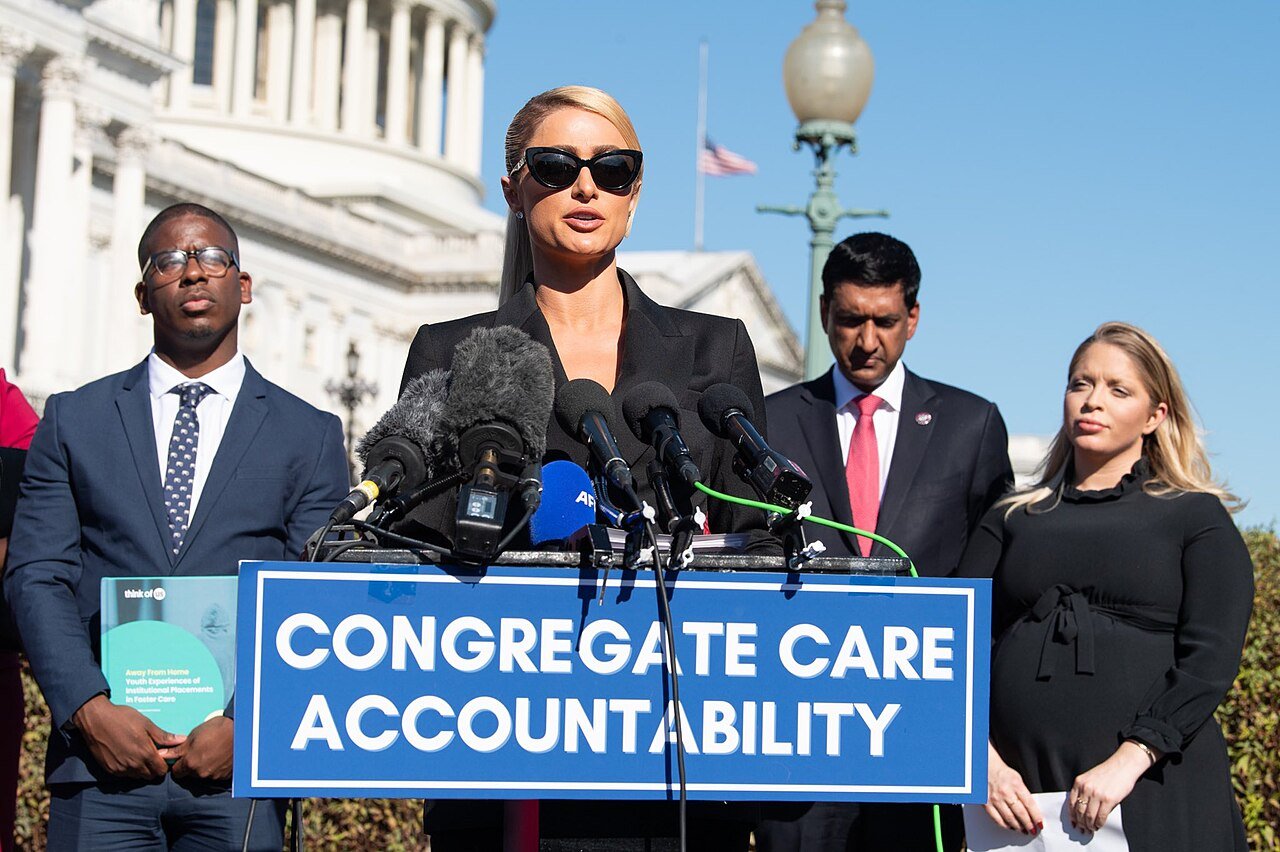
Her account of the institutions she was sent to as a teenager — culminating in 11 months at Provo Canyon School in Utah — is corroborated in its essentials by hundreds of other survivors, and in her Washington Post account she described being choked, slapped and held in solitary confinement in a room marked by scratch marks and blood stains. What she did with that history is the strongest thing in her favour in this entire file, and it is not close. She testified in February 2021 for Utah’s SB 127, signed into law that year, banning unauthorised chemical sedation and mechanical restraints and prohibiting isolation rooms in youth facilities. She has lobbied on Capitol Hill since October 2021. On 26 June 2024 she told the House Ways and Means Committee she had been “violently restrained, stripped naked and thrown into solitary confinement… force-fed medications and sexually abused by the staff”. On 24 December 2024, President Biden signed the Stop Institutional Child Abuse Act — passed unanimously in the Senate and 373–33 in the House. Children who will never know her name are safer because Paris Hilton spent her fame on them. Her ADHD advocacy belongs in the same ledger, with its own flag: her framing — “ADHD isn’t a limitation; it’s a superpower. It’s my secret weapon” (Teen Vogue); “My mind is constantly racing. But I see it as a superpower because it’s fueled so much of my creativity” (People) — has genuinely comforted people, funds partnerships through her 11:11 foundation, and is also a brand, and draws real criticism from within the ADHD community for sanding a disability down into a slogan. Both things, again, are true.
Her trauma is real. Archie’s line, and the line of the video essay that prompted this investigation, is the one this investigation adopts: trauma explains; it does not licence. The advocacy she has done for other people’s children does not retire the record of what she said about other people’s children — the partygoer from Compton, the men behind their backs, the community in the cab. Moral ledgers do not net off. They just sit there, both columns full.
Analysis: the pattern of impunity
This section is analysis, and it is labelled as such. Evolving Humanities does not claim Paris Hilton is a member of anything, and nothing in the documented record shows organisational affiliation of any kind. The question this investigation was commissioned to ask is different, and it is Archie’s framing: nepotism, and what he calls the white supremacy of the outcome — not an ideology in her head, which no recording can prove, but a structure around her, which the record demonstrates completely. A structure in which an heiress’s surname is a platform; in which slurs on tape cost a news cycle; in which a sheriff reaches for the release valve; in which a documentary she produces can delete the subject entirely and be praised for its honesty; in which a memoir can convert the record into a symptom and be received as courage.
The comparison that makes the structure visible is not hypothetical. In 2014, ABC News published a mainstream accounting — “5 White Celebrities Whose Use of the N-Word Backfired” — covering Hilton alongside Madonna, Gwyneth Paltrow, Charlie Sheen and Tim Allen. Its own word for the consequence, in entry after entry, is backlash: a deleted post, a defensive tweet, an apology statement. Nobody in the list of five lost work. The ceiling of consequence, in a mainstream outlet’s own summary, was embarrassment. Jezebel’s verdict on the Hilton tapes specifically is the same observation sharpened: the footage “circulated widely when it leaked in 2007, was discussed in mainstream venues like The View and CNN, and its existence did absolutely nothing to impede Hilton’s career.”
The amnesia is even measurable in the reference shelf: Nicki Swift’s catalogue of Hilton’s fourteen “biggest missteps and controversies” — as mainstream a record of her scandals as exists — omits the Strauss passage and the Trump accusers interview entirely. The rebrand did not merely survive the record; it edited the index. Look at the mechanics coldly, and a logic shows through that is older than celebrity. At every stage of this record, someone else’s substance was spent for her benefit. A partygoer’s dignity was the price of a laugh on a party tape. An employee’s heritage became, on his court-filed account, a slur to be fenced off by a restraining order. Gay men’s lives were shrunk to a punchline about disease in the back of a cab. Women’s accounts of assault were waved away as opportunism to shield a powerful family friend. Then the costs were transferred a second time: lawyers to suppress, publicists to reframe, and finally an audience’s sympathy — her trauma, which is real, laid like a cloth over other people’s. This is the extraction at the heart of the system this investigation was asked to name. White supremacy, in its daily operation, is not only the spectacular violence of the history books, the hurting and the killing. It is a standing arrangement in which some people’s time, dignity, pain and lives are treated as raw material for other people’s comfort, profit and story — other people’s existence, wasted at retail scale — and the arrangement is so ordinary that it can run, uninterrupted, through twenty years of one woman’s fame without the culture ever quite seeing it.
Analysis: and the standard travelled. For a decade, the most famous young woman in the world was an heiress whose recorded vocabulary sorted human beings into the valuable and the disposable, and the culture’s answer was magazine covers. A standard like that does not stay on television. It enters ordinary households as a measuring stick. It teaches the people measured against it — too dark, too poor, too foreign, too queer — to do the measuring on themselves, and seeds a private self-hate in exactly the people the words were aimed at; it strains the families who must teach their children, against the evidence of the culture, that the stick is lying. No one should have to build a self inside a hierarchy that has already priced them. No one should have to spend their one life — their hours, their dignity, their brief time on this earth — as the raw material of someone else’s benefit, or endure their existence bent under a system that was built by spending people like them. That is the human cost underneath the celebrity story, and it is why a gossip item from 2007 earns an investigation: because the system that absorbed those tapes without blinking is the same system, running quietly, everywhere, still deciding whose pain counts as a cost and whose counts as content. Set beside that the ordinary economy of offence, in which careers — usually smaller, usually browner, usually poorer — end over single resurfaced posts, and the pattern names itself. The point is not that Hilton should have been destroyed; destruction is not justice, and this investigation has documented what destruction culture did to her when she was its target. The point is that forgiveness, context, second acts and “it’s complicated” are resources, and in America they are distributed the way her grandfather’s hotels were once distributed: not to everyone. She received, at every stage, the full benefit of every doubt — from her publicist’s framing, from a sheriff, from documentarians, from profile writers, from an audience invited to see the survivor and not the record. Whether that distribution is called white supremacy, or white privilege, or simply the arithmetic of fame and money, the record underneath it does not change. She said the words. The words are on tape. And the tape, in the end, is the only participant in this story that was never given a rebrand.
Timeline: the record in order
- 1999 — The conversation Neil Strauss later reports in his 2011 book: the “one percent” remark. Alleged; denied in 2011; never litigated.
- 2001 — Proclaimed New York’s leading “It Girl”. A private tape is filmed with Rick Salomon. The locker-party video Mintz later dates to New Year’s Eve this year.
- 2003 — The Simple Life premieres. The Salomon tape leaks online.
- 2004 — 1 Night in Paris sold without her consent. October: the Maung videotape claim and Hilton’s first template denial — “Anyone who knows me knows that this is not me.”
- 2005 — House of Wax marketed on “See Paris Die”. The storage-locker payments lapse; contents auctioned (Page Six reported a $2,775 auction price to Nabil and Nabila Harniss).
- 2006 — January: Quintana files; February: the restraining order is granted after a contested hearing. The Simple Life’s dark-makeup episode airs (accounts conflict — see the caricatures section). September: DUI arrest.
- 2007 — January: ParisExposed.com launches at $39.97 a month. February: TMZ’s “Paris the Bigot?” headline; the Mintz statement; a restraining order and then an injunction close the site; a boycott movement writes to FILA. May–June: 45-day sentence, sheriff’s release, judge’s reversal, 23 days served. June: the site reopens at $19.97 in defiance of the injunction. December: Barron Hilton pledges 97 per cent of his fortune to the family foundation.
- 2010 — Las Vegas: arrested with cocaine in her bag — she reportedly said she had thought it was gum. A guilty plea brought a $2,000 fine and 200 hours of community service. Two marijuana incidents the same summer, in Corsica and South Africa, ended with no consequences at all.
- 2011 — Strauss’s book publishes the anecdote; her spokesperson denies it and mentions lawyers. No suit follows.
- 2012 — September: the cab recording; the health-warning spin; the GLAAD apology, all inside one news cycle.
- 2016 — November: tells The Project she voted for Trump; sits for the Marie Claire interview days after the election.
- 2017 — August: the Marie Claire remarks surface; she apologises for their delivery. She has already acknowledged she did not vote.
- 2020 — This Is Paris: the character confession, the Provo revelations — and the racism record omitted entirely.
- 2021 — Utah SB 127 signed after her testimony. Capitol Hill lobbying begins.
- 2023 — February: the Harper’s Bazaar answer routes the tapes to Provo. March: Paris: The Memoir — “an explanation, not an excuse”.
- 2024 — June: Ways and Means testimony. December: the Stop Institutional Child Abuse Act is signed into law.
- 2025 — The Sunday Times: “I’m self-made… No one’s ever given me anything in my entire life.”
What we could not verify
- The Rolling Stone critique. The video essay that prompted this investigation attributes to Rolling Stone a critique of This Is Paris, including the claim that Hilton once said only ugly girls perform oral sex. We could not retrieve the Rolling Stone piece, and the quoted line is not sourced anywhere we could check. The documentary’s omission of the racism record is documented independently by Jezebel and Film Daily, which is what this investigation relies on.
- The locker money trail. The chain in the text follows Hilton’s federal complaint as reported by The Smoking Gun on 30 January 2007: approximately $2,775 from the storage facility to Nabil and Nabila Haniss, then $10 million to Bardia Persa. Some contemporaneous coverage of the filings put an intermediate purchase figure at $3,590; the complaint chain is the one this investigation relies on. Page Six’s report that she was offered the archive back for more than $2 million is a separate figure, reported at the time, never adjudicated.
- A further locker-era clip, described in fan and wiki sources as containing another racial slur claim, rests on sourcing too weak to print. Dropped.
- A reported Utah licence action against Provo Canyon’s Springville campus could not be dated reliably. Dropped; the advocacy record stands without it.
- Her net worth and inheritance share, as circulated by celebrity-net-worth sites, are estimates presented as facts nowhere in this investigation.
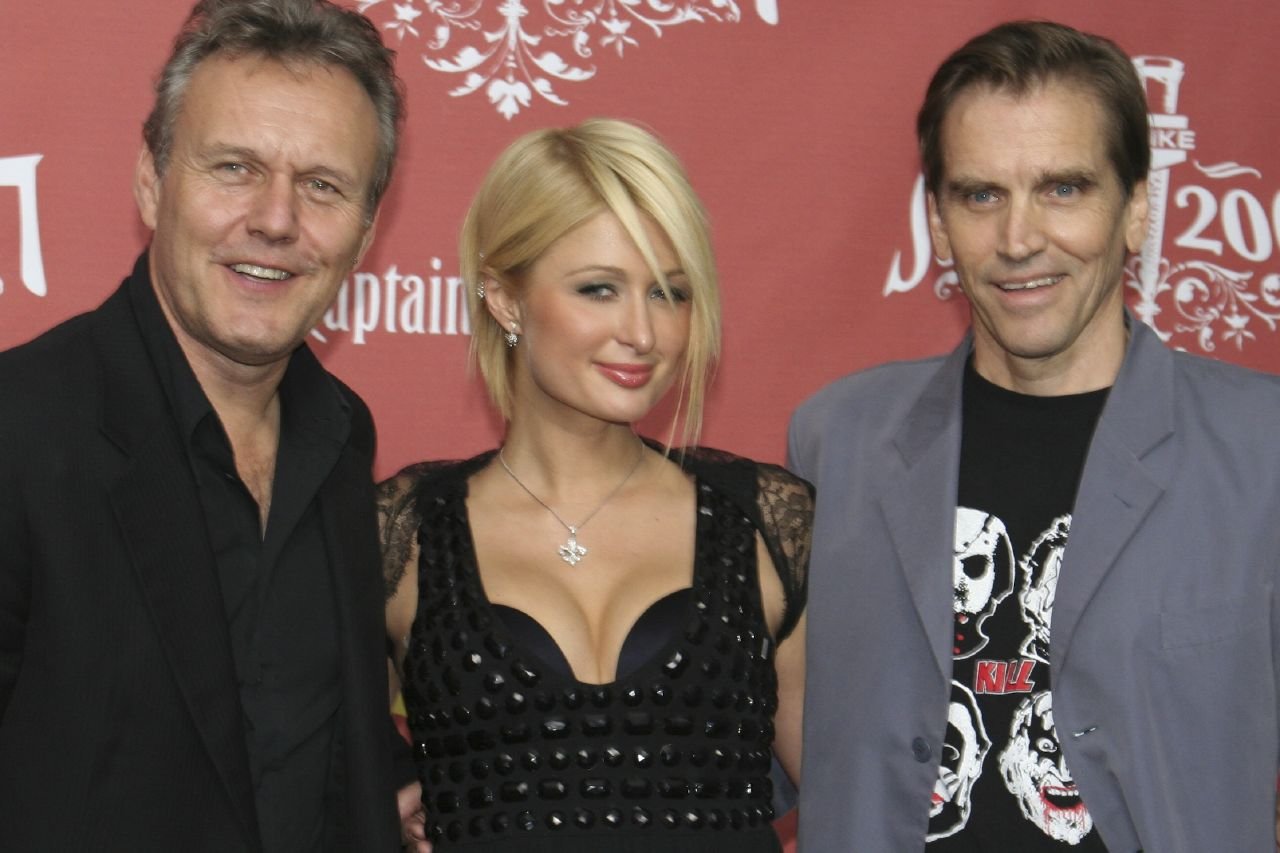
Photo: pinguino, via Wikimedia Commons (CC BY 2.0) — Paris Hilton at the 2007 Scream Awards, Los Angeles.
Sources
- Jezebel, “The Revision of Paris Hilton’s Story Is Missing Something: Her History With the N-Word” (Dec 2020) — jezebel.com
- Film Daily, “Is Paris Hilton a racist today?” — filmdaily.co
- The News Intel, “Paris Hilton’s History Of Racism And Anti-Gay Comments” — thenewsintel.com
- PAPER, “Paris Hilton Addresses Past Racist and Homophobic Remarks” (21 Mar 2023) — papermag.com
- Nicki Swift, “Paris Hilton’s Biggest Missteps And Controversies Over The Years” — nickiswift.com
- BuzzFeed, “Paris Hilton Says She’s Self Made” (Nov 2025) — buzzfeed.com
- People, “Paris Hilton Calls ADHD Her ‘Superpower'” — people.com
- Wikipedia, “House of Wax (2005 film)” — marketing campaign — en.wikipedia.org
- The Smoking Gun, “The Invasion Of Paris” (30 Jan 2007) and the site’s defiant relaunch (11 Jun 2007) — federal complaint reporting — thesmokinggun.com
- Reuters (7 Feb 2006), Quintana restraining-order hearing; NY Daily News, Rush & Molloy (30 Sept 2004), the Maung tape; Page Six (14 Oct 2004; Feb 2007), the Davis quotes, Racial Unity USA and the FILA boycott; ABC News (21 Mar 2011), the Strauss launch and his own hedge; TMZ (2007) and InStyle (2020) on the Simple Life dark-makeup episode
Leave a comment
Comment as a guest and verify your email, or sign in or create a reader account. Guest comments reach our review queue after email verification; account holders can submit directly for review.