Listen to this article
Take the story with you. Choose a voice and a pace that suits you.
Or listen in another language / choose a voice
Getting your device voices ready…
The voice follows the displayed language and your browser’s regional preference when available. You can choose another narration voice.
The lame-duck Congress funding deadline December 11 is now the first real test of Washington’s new balance of power. Voters changed who will control Congress in January. They did not change who has to keep the government funded in December. That job belongs to the outgoing, Republican-led Congress, sitting until 3 January, and if it fails, a funding lapse begins on 12 December (No Labels; Holland & Knight).
Congress returns on 9 November for a lame-duck session expected to run until Christmas, with a Thanksgiving break in between (No Labels). Information verified through 5 November 2026.
The lame-duck Congress funding deadline December 11, explained plainly
Federal funding runs out on December 11 unless Congress passes the full-year spending bills or another stopgap (No Labels). The current continuing resolution funds the government through that date, and the House had passed only three of the 12 fiscal 2027 appropriations bills — Agriculture, Military Construction–Veterans Affairs, and National Security–State — while the Senate had completed no comparable floor action before the pre-election recess (Holland & Knight).
Three routes exist. Pass all or most of the 12 bills in an omnibus or in smaller bundles called minibuses. Pass another short stopgap into early 2027. Or let funding lapse for some agencies while finishing others (Holland & Knight). A lame-duck session, for anyone who has not lived through one, is the stretch between Election Day and the new Congress taking office in January, when members who lost or are retiring still vote (No Labels).
The lame-duck session 2026 agenda is much longer than one funding bill
Funding is the deadline. It is not the whole list. The National Defense Authorization Act, which sets Pentagon policy, stalled in the Senate in July, and Congress has passed one every year for more than six decades (No Labels). Holland & Knight’s year-end review puts the likely final NDAA as highly likely to pass, but probably only after partisan House provisions are removed or modified (Holland & Knight).
The farm bill expired on 30 September. Crop insurance and SNAP benefits continue for now, but conservation, research and rural development programmes face funding uncertainty, and if Congress does not act by 31 December, farm programmes revert to permanent law written in the 1930s and 1940s (No Labels). Section 702 of the Foreign Intelligence Surveillance Act, which allows warrantless collection of foreigners’ communications abroad, lapsed in June, though a court approval from March keeps collection going into early 2027 (No Labels).
Surface transportation programmes were also extended only through 11 December as part of the same September law, leaving a longer reauthorization still to negotiate (Holland & Knight).
Government shutdown risk in December 2026 is real, and both sides know their leverage
A partial government shutdown remains possible if the parties cannot resolve disputes over spending levels, policy riders, defence funding, healthcare and Trump administration authorities before 11 December (Holland & Knight). The main funding fight, on No Labels’ account, is over defence: the Trump administration wants a record $1.5 trillion, which Senate Democrats reject (No Labels).
Leverage cuts both ways here. Once seated in January, Democrats are expected to use their new majorities to investigate the Trump administration and demand concessions on major legislation, and the Democratic Senate can block Trump’s nominees (Reuters). House Democratic Leader Hakeem Jeffries said on Wednesday that the incoming majority would focus on affordability and accountability, and he has publicly stated he favours doing the appropriations bills during the lame-duck period (Reuters; Holland & Knight).
That last point matters. The incoming speaker-in-waiting wants the spending bills done now, not dumped on his new majority in January. Republicans, meanwhile, hold the reins for one more must-pass bill and could use it to enact conservative priorities during the lame-duck period (Reuters). Trump himself has said he has the power of the veto, while also saying he can probably get along with the Democrats unless they want to be destructive (Reuters).
Analysis: December 11 is the only hard deadline in a crowded session, and hard deadlines concentrate minds in a way campaign promises don’t. The likeliest outcome, on the evidence of both parties’ stated positions, is a deal of some shape — an omnibus, a hybrid, or a short stopgap into early 2027. The risk is not that nobody wants a deal. It is that a short calendar, a defence-spending fight and a leadership transition on the Republican side — House Speaker Mike Johnson has said he will not continue to lead his caucus next year (Reuters) — leave very little room to fix a negotiation that goes wrong late.
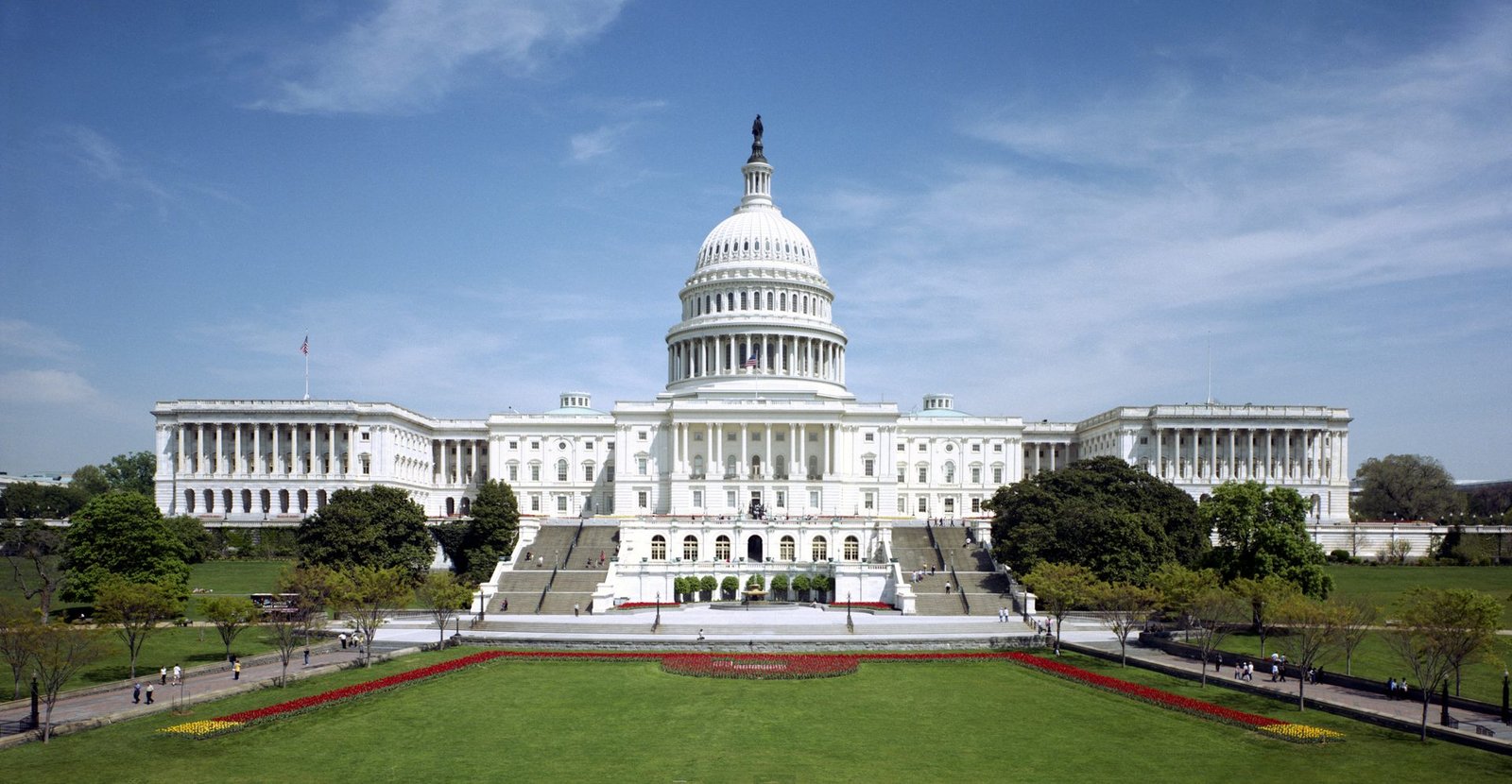
Photo: Architect of the Capitol, via Wikimedia Commons (Public domain)
Sources
- https://nolabels.org/the-latest/the-2026-lame-duck-session-what-congress-still-has-to-pass-after-the-midterms/
- https://www.hklaw.com/en/insights/publications/2026/10/beyond-the-midterms-congress-faces-converging-year-end-deadlines
- https://www.reuters.com/legal/government/democrats-vow-rein-trump-he-shows-off-white-house-ballroom-2026-11-05/
- https://www.usatoday.com/story/news/politics/2026/11/04/congress-house-democrats-trump-win-midterms/92597606007/
Leave a comment
Comment as a guest and verify your email, or sign in or create a reader account. Guest comments reach our review queue after email verification; account holders can submit directly for review.