Listen to this article
Take the story with you. Choose a voice and a pace that suits you.
Or listen in another language / choose a voice
Getting your device voices ready…
The voice follows the displayed language and your browser’s regional preference when available. You can choose another narration voice.
Analysis. Election held Tuesday, November 3, 2026; results and reaction verified November 4, 2026.
TL;DR: The Republican collapse was earned — prices, tariffs, and a war the voters never agreed to. The Democratic victory lap is being run under the banner of “Black excellence.” But the new majority’s announced agenda contains no policy written for the Black voters who helped deliver it.
By Wednesday morning, the 2026 midterm election results were not close. Democrats took the House and the Senate, flipping seven Senate seats — including Texas, where a Democrat had not won since 1988, and Kansas, where one had not won since 1932 — and five governorships, among them Texas itself. Analysts reached for 1974, the post-Watergate wipeout, to find a defeat on this scale. The question moving through Black commentary by breakfast was not whether the Republicans had been crushed. It was what, exactly, Black America had won.
Why did Republicans lose the midterms?
Start with the receipt. In NBC News exit polling, just 21 percent of voters said the president’s tariffs had helped the national economy; more than 60 percent said they had caused harm. Gas prices, driven up by the war in Iran, were the most expensive ever recorded on an Election Day, and Brown University researchers put the war’s added fuel cost at roughly $1,150 per household. Vice President JD Vance pointed at the war himself — a war started by a president elected, in part, on the promise to end wars rather than begin them. The AP Voter Poll found about two-thirds of voters saying the president simply does not have the right priorities.
Filmmaker and commentator Tariq Nasheed, breaking the result down on Tariq Radio, added the point the network panels mostly skipped: he says he warned the administration a year ago it was repeating the George W. Bush administration’s course, and would collect the same result. His charge: Republicans never spoke to Black voters in specifics — no named benefits, no message that landed, nothing that made Black voters feel heard. A party can lose on prices alone; it loses Texas when whole constituencies conclude nobody in power is even talking to them.
What is being celebrated this morning?
Representation, and the celebration is not invented. Keisha Lance Bottoms is the first Black woman elected governor in American history, winning Georgia with 54.3 percent. For the first time ever, five Black governors will serve simultaneously: Wes Moore in Maryland, Aaron Ford in Nevada, David Crowley in Wisconsin, Byron Donalds in Florida, and Bottoms in Georgia. Hakeem Jeffries is positioned to become the first Black Speaker of the House. Black news outlets are filing the night, accurately, under “Black excellence.”
Five governorships — in a republic that elected exactly three Black governors in its first 250 years — is not nothing. The question is what the symbolism is being used to settle.
What did Black voters say they wanted?
In North Carolina, Black early ballots ran more than 60 percent ahead of the same point in 2022; in Georgia, Black voters cast 32.4 percent of the early vote. And their stated priorities were material, not ceremonial. A Harvard CAPS/Harris poll found 52 percent of Black voters naming an economic issue as their top concern. Howard University’s midterm poll found 89 percent blaming the president’s policies, the Iran war included, for the affordability crisis. The Black Census Project’s early findings read like a ledger: 44 percent dream of being debt-free, 41 percent of better health, 35 percent of earning more, 25 percent of safe, affordable housing.
The same data carries the warning: only 3 percent of Black Census respondents trust the federal government, and only 22 percent trust Black elected officials. Before the election, a Congressional Black Caucus member, speaking anonymously, complained that no one on the trail was talking to Black voters or “uplifting a Black agenda.” Black voters delivered this wave while Black unemployment climbed from 6.0 to 7.0 percent in a single month, and while federal job cuts fell hardest on Black women. Participation is not satisfaction. It never was.
What is on the new majority’s agenda — and what is not?
Leader Jeffries has named the opening moves: restore the enhanced Affordable Care Act tax credits, reverse the Medicaid cuts, take back congressional authority over tariffs, end the Iran war, and open investigations. Most of it is worth doing. None of it is a policy for Black Americans. There is no reparations study on the list, no targeted economic program, nothing with Black America’s name on it — this for the constituency that just supplied the wave’s margin in state after state.
A Democratic strategist saw this coming before a single vote was counted, warning that the party had yet to articulate a specific agenda for Black Americans and needed something “real, economical, and tangible” — naming a reparations commission as one example — and that symbolic representation alone cannot sustain Black support.
What are Black voters saying where the celebration isn’t?
Under the Tariq Radio broadcast — 892 comments and climbing within hours — the most-liked reactions are not triumphal. The top response describes a pendulum — punish the party in power, swing, repeat. The next tier names prices. And running through the thread, heavily endorsed, is the blunt refrain that neither party offered Foundational Black Americans anything tangible — that some voters sat the election out over it, and that a row of Black governors and senators, by itself, changes nothing about what gets done for Black people.
That is not ingratitude. It is arithmetic, performed by voters who have watched this cycle before.
The test arrives in January, in the new Congress’s first one hundred hours, when the agenda is read out loud. If nothing in it carries Black Americans’ name, then November 3 gave Black voters precisely what the comment sections already suspect: new faces to applaud, and the same empty space where the policy was supposed to be. Pendulums swing for a reason. They swing because the bill never gets paid.
Sources: Reuters, “Democrats seize Congress in sweeping midterm repudiation of Trump” (Nov 4, 2026); Reason, “How Did Republicans Lose This Badly?” (NBC News exit poll data, Nov 4, 2026); AP reporting on the Bottoms campaign and the Jeffries agenda (via USA TODAY, Nov 2026); Howard University Initiative on Public Opinion, Midterm Poll Report (Oct 2026); Black Futures Lab, 2026 Black Census Project early findings (Oct 2026); Tariq Radio, “Why Did The Republicans Get Crushed By The Democrats During Midterms?” (Nov 4, 2026).
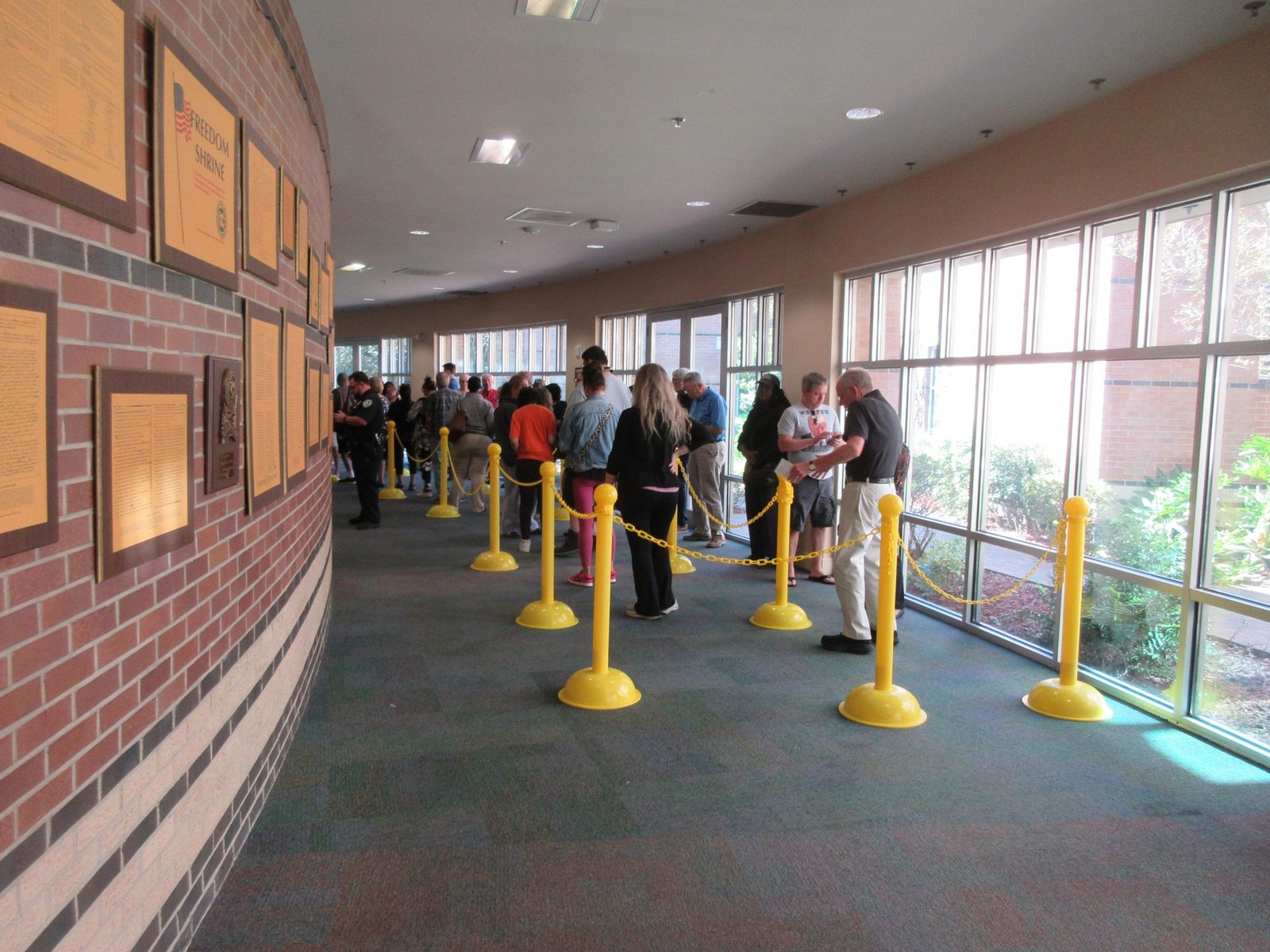
Photo: Infrogmation, via Wikimedia Commons (CC BY-SA 4.0)
Leave a comment
Comment as a guest and verify your email, or sign in or create a reader account. Guest comments reach our review queue after email verification; account holders can submit directly for review.