Listen to this article
Take the story with you. Choose a voice and a pace that suits you.
Or listen in another language / choose a voice
Getting your device voices ready…
The voice follows the displayed language and your browser’s regional preference when available. You can choose another narration voice.
The Lancet Countdown 2026 report, published on 28 October 2026 ahead of the COP31 climate conference, asks for something its authors have not asked for in ten editions: a formal declaration that climate change is a global health emergency (Lancet Countdown). The report is the project’s tenth annual assessment. Led by University College London (UCL) in collaboration with the World Health Organization (WHO) and published in The Lancet, it draws on 146 researchers from more than 100 institutions across more than 30 countries and tracks 54 indicators (Phys.org).
Its central comparison is uncomfortable. Many health harms grew faster in 2016–2025, the decade after the Paris Agreement took effect, than in 2006–2015, the decade before it (Phys.org). Gains arrived too — record clean-energy spending, more health adaptation plans, cleaner air in dozens of countries. They just didn’t arrive at the speed of the harm.
Information verified through 28 October 2026.
Lancet Countdown 2026 heat deaths: a record year inside a record decade
Start with heat, because the report does. Heat was linked to an average of 540,800 estimated deaths a year between 2016 and 2023. The researchers attribute 68% of those deaths — 369,900 a year — to human-caused climate change, up from 55% in 2006–2015 (Phys.org). In 2023, the hottest year in the period, heat was linked to a record 710,000 estimated deaths, more than malaria or HIV caused that year, with 71.5% attributed to climate change. Across 2016–2023 the report puts climate-caused heat deaths at almost 3 million (Phys.org).
Those are modelled estimates, not death-certificate counts, and the report presents them as such. Even read cautiously, the direction is consistent across its indicators.
Heat also took wages. Reduced capacity to work in the heat cost the global economy an estimated $1.07 trillion in potential income in 2025 — 0.91% of global output, and the third straight year above $1 trillion (Phys.org). Southeast Asia lost the equivalent of 3.9% of GDP and Africa 3.2%, against 0.2% in Europe and 1.5% in the Americas. Agriculture absorbed 38% of the losses and construction 29%, because both jobs happen outdoors, in the sun, on the body’s limits (Scienmag).
Water swinging both ways at once
Drought covered more than half the planet’s land — 51.8% — for at least a month in 2025, the second-worst year on record after 2023. Since 2016 the drought-hit area has grown more than 700% faster than it did in the previous decade (Phys.org).
A new satellite analysis in the report finds the opposite problem running alongside it. Since 2003, 43% of land has seen long-term water storage fall while 37% has seen it rise — drying and wetting extremes together affecting more than 80% of land, with knock-on risks for crops, food supplies and sanitation (Phys.org). Very extreme rainfall now reaches almost 17.2% of global land each year, up from 14.8% in the previous decade, raising flood, landslide and waterborne disease risk (Scienmag).
The Lancet Countdown 2026 report and its call for a climate change global health emergency
Why ask for emergency language at all? The authors want health placed at the centre of every climate decision — emissions targets, funding priorities, adaptation plans — backed by a new WHO instrument for a coordinated response (Scienmag). Their asks include fair, urgent emissions cuts and climate finance for health delivered as grants rather than loans, so adapting countries don’t borrow to survive a problem they contributed least to (Scienmag).
The funding gap behind that ask is stark. Developing countries have quantified health adaptation needs of at least $3.3 billion a year, based on only 48 of 79 countries that produced estimates. Just $1.1 billion of it was committed in 2024 (Phys.org).
Marina Romanello, the Countdown’s executive director at UCL, put the finding bluntly in the release: the harms are growing faster than the response, and in many cases accelerating (Phys.org). Helen Clark, former prime minister of New Zealand and chair of the Countdown board, said what is missing is not evidence but political will (Lancet Countdown).
Progress that proves the point, and the fossil fuel drag
The report credits real wins. Global clean-energy investment rose 7.2% in 2025 to a record $2.1 trillion, 82% more than the $1.16 trillion invested in fossil fuels, and renewable electricity grew from 5.5% of generation in 2016 to 13.5% in 2023 (Phys.org). Cleaner air has prevented an estimated 323,000 deaths a year in at least 77 countries where fossil-fuel air pollution has fallen since 2016. Health systems are moving too: 56 of 194 WHO member states now hold a national climate-health adaptation plan, up from 14 in 2015 (Phys.org).
Set against that: fossil fuels still supply over 80% of world energy, emissions hit a record high in 2024, and fossil-fuel air pollution still kills an estimated 2.73 million people a year (Phys.org). The 100 largest oil and gas companies plan to overshoot 1.5°C-compatible production by 150% by 2040, up from 138% a year earlier (Scienmag).
Analysis: read the emergency call as an accounting argument, not a slogan. The Countdown’s own numbers show health-centred action paying — hundreds of thousands of air-pollution deaths avoided, warning systems slowing extreme-weather deaths where they exist. Its complaint is arithmetic: benefits growing at single-digit rates against harms compounding faster than in the pre-Paris decade. Whether COP31 delegates adopt the word “emergency” matters less than whether adaptation money stops arriving at a third of the stated need.
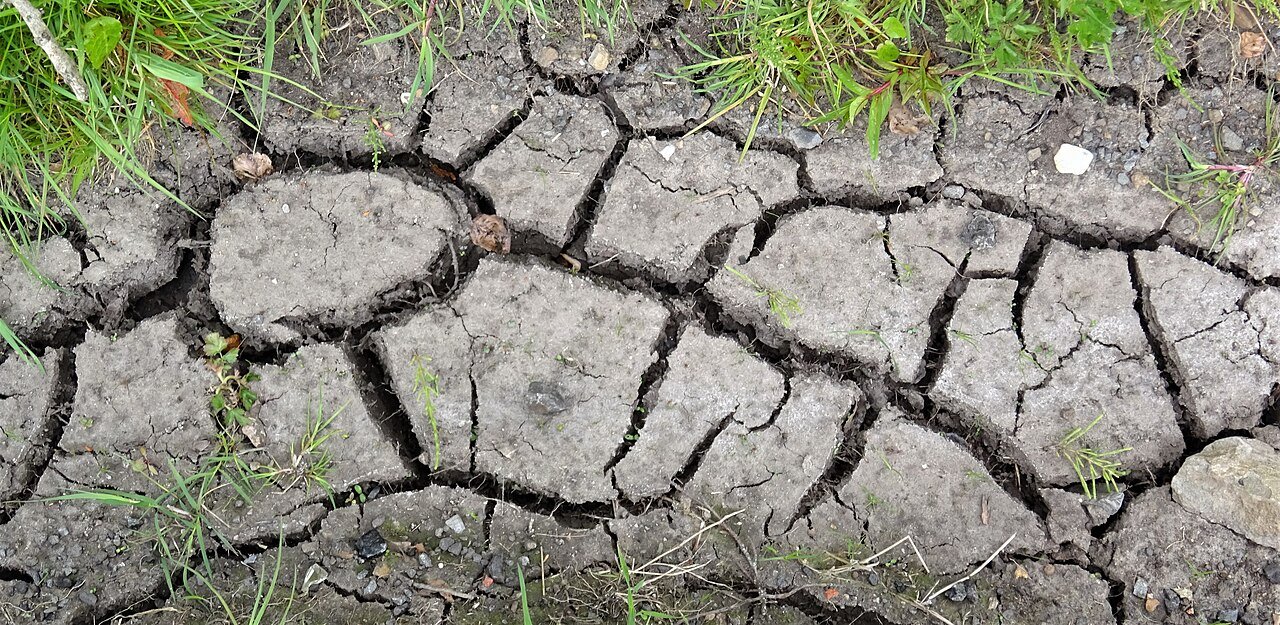
Photo: Rosser1954, via Wikimedia Commons (CC BY-SA 4.0)
Sources
- https://lancetcountdown.org/2026-report/
- https://phys.org/news/2026-10-climate-health-outpace-action-prompting.html
- https://scienmag.com/climate-change-is-outpacing-health-action-as-heat-deaths-hit-record-highs-lancet-countdown-warns/
- https://thefourthplate.com/2026/10/28/lancet-countdown-2026-report-heat-workers/
Leave a comment
Comment as a guest and verify your email, or sign in or create a reader account. Guest comments reach our review queue after email verification; account holders can submit directly for review.