Listen to this article
Take the story with you. Choose a voice and a pace that suits you.
Or listen in another language / choose a voice
Getting your device voices ready…
The voice follows the displayed language and your browser’s regional preference when available. You can choose another narration voice.
The extreme heat exam scores Cambodia study is not about one bad exam day. It follows 731,279 students across a decade of school years and finds that heat spread over months — the kind students sit through lesson after lesson — is what drags marks down, and it does not drag everyone’s marks equally.
Information verified through 26 October 2026.
The research, titled Effects of Extreme Temperature Exposure on Learning, was published by the Asian Development Bank in October 2026, with researchers from the Paris School of Economics, the University of California, Berkeley, and the ADB, DevDiscourse reported on 25 October 2026.
What the extreme heat exam scores Cambodia study measured
The team linked Grade 12 national examination records from 2014 to 2023 to high-resolution climate records, covering over 730,000 students across 662 schools, the paper’s listing on PreventionWeb states. Cambodia suits the question. It has a tropical climate, high humidity and limited cooling in many schools, and its average temperature has risen about 0.18 degrees Celsius per decade since the 1960s, via DevDiscourse.
The measure was the heat index — temperature combined with humidity, meaning how hot conditions feel. During the study period the average school-day heat index was 30.48 degrees Celsius, and students faced about 76 school days a year when the index passed 31 degrees, DevDiscourse reported.
The heat index learning loss students in social sciences carried
The heat index learning loss students showed was concentrated, not general. A one-degree Celsius increase in the average school-year heat index was associated with a fall of about 0.046 standard deviations in examination scores among social science students. Ten extra days with a heat index between 32 and 33 degrees were linked to a fall of about 0.03 standard deviations, via DevDiscourse.
Science students showed no statistically significant overall fall. The researchers suggest stronger preparation, competitive examination requirements and greater access to tutoring may help some students cope — explanations they note remain unconfirmed, via DevDiscourse. Students in consistently hotter areas also seemed better adapted, while those in cooler regions were hit harder when temperatures rose, PreventionWeb summarised.
Who lost most is the finding that should worry planners. Girls in social sciences lost about 0.065 standard deviations per degree, even though female students consistently outperformed males in Cambodia’s national examinations overall. Rural social science students lost ground on particularly hot days. Geography, history, Khmer language and mathematics were among the subjects hit, and high-achieving social science students fell too — the students competing for scholarships and university places. Ten extra days at a heat index of 34 to 35 degrees were associated with a 1.7-percentage-point rise in the probability of failing, via DevDiscourse.
The conditions behind the numbers are plain. About 32 per cent of schools in the study’s infrastructure data lacked access to water, and Grade 12 classes averaged around 45 students, via DevDiscourse. Heat works on concentration, memory and sleep; a crowded room with no water turns that physiology into a timetable problem.
Nor does the damage stop at the school gate. The researchers note that students also need protection at home, where uncomfortable conditions interfere with homework, examination preparation and sleep, via DevDiscourse. A cooled classroom followed by a sleepless night in a hot house recovers only part of the loss — which is why the paper treats heat as a whole-day exposure, not a lesson-by-lesson one.
What climate resilient schools heat planning would change
The authors of the Effects of Extreme Temperature Exposure on Learning ADB paper recommend improving classroom infrastructure, ventilation and scheduling, with targeted support for vulnerable groups, according to PreventionWeb. The wider recommendations reported by DevDiscourse include reflective roofs, shaded areas, drinking water, smaller classes, moving demanding lessons to cooler morning hours, adjusting calendars away from the hottest periods, and heat early-warning systems.
Analysis: None of that is exotic technology. That is the uncomfortable part. For climate resilient schools heat is mostly a budget line — roofs, water, ventilation, timetables — weighed against scholarships lost by students who never learn what the heat cost them, because a fall of 0.046 standard deviations never arrives with a label attached. Cambodia’s data now attaches one. Other hot countries running national exams have the same records sitting in their own ministries. The question this study puts to them is whether they will do the matching exercise before the next decade of results, or after.
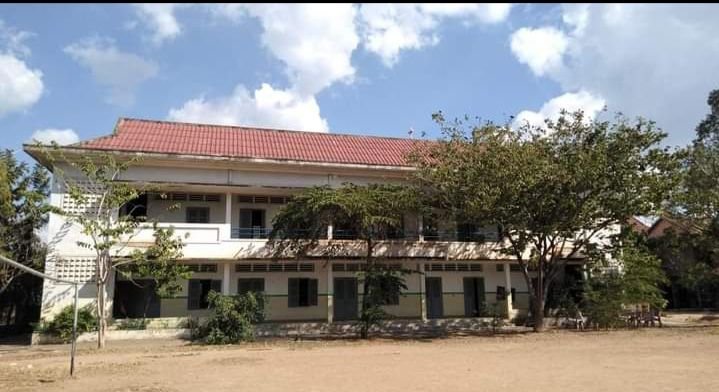
Photo: Khea Sivorn, via Wikimedia Commons (CC BY-SA 4.0)
Sources
- DevDiscourse, “Too Hot to Learn: Rising Temperatures Threaten Exam Scores and Education Equality in Cambodia”, 25 October 2026, https://www.devdiscourse.com/article/education/3997059-too-hot-to-learn-rising-temperatures-threaten-exam-scores-and-education-equality-in-cambodia
- PreventionWeb, “Effects of extreme temperature exposure on learning” (ADB working paper, DOI 10.22617/WPS260482-2), checked 23 October 2026, https://www.preventionweb.net/publication/documents-and-publications/effects-extreme-temperature-exposure-learning
Leave a comment
Comment as a guest and verify your email, or sign in or create a reader account. Guest comments reach our review queue after email verification; account holders can submit directly for review.