Listen to this article
Take the story with you. Choose a voice and a pace that suits you.
Or listen in another language / choose a voice
Getting your device voices ready…
The voice follows the displayed language and your browser’s regional preference when available. You can choose another narration voice.
The Iberian lynx population 2025 count stands at 2,663 animals. In 2002 there were 94. A species that lived in two pockets of Andalusia now occupies ground across Spain and Portugal, and the latest census, reported on 26 October 2026, sets a new record high.
Information verified through 26 October 2026.
The census was run by Spain’s Ministry for the Ecological Transition (MITECO) and the Fundación Biodiversidad, according to the 26 October census report. Of the 2,663 animals, 2,269 were counted in Spain and 394 in Portugal.
Iberian lynx population 2025: from 94 to 2,663, in steps you can check
The climb was slow, then steep. Numbers passed 400 by around 2015 and reached 1,111 in 2020. The count hit 2,021 in 2023, then 2,401 in 2024 — a 19% rise in a single year — before reaching 2,663 in 2025, the census report said.
Panthera tells the start of that curve plainly: by the early 2000s fewer than 100 individuals remained in the wild, after disease decimated European rabbit populations and habitat loss and overhunting compounded the crisis. Rabbits matter here more than scenery does. The lynx depends heavily on them, a point Rewilding Europe also stresses: Iberian lynx depend heavily on rabbits, while their Eurasian cousins hunt roe deer and other ungulates.
Lose the prey, lose the cat. That was the mechanism of the collapse, and reversing it became the mechanism of the return.
Iberian lynx conservation recovery was built, not wished for
The Iberian lynx conservation recovery rests on European LIFE programmes running since 2002, including the ongoing LIFE LynxConnect project, according to the census report. The tools were practical:
- captive breeding, then reintroduction into new territories in Spain and Portugal;
- restoring wild rabbit populations hit by viral haemorrhagic disease;
- ecological corridors between protected areas;
- cutting road mortality, described as the leading non-natural cause of death for the species.
Panthera describes the same programme as a coordinated, science-driven effort led by the Spanish and Portuguese governments and supported by the European Union, using breeding in captivity and release into the wild alongside habitat restoration and prey recovery. No single release did this. Two decades of releases, monitoring and cross-border work did.
The European Commission, which co-funded the projects, notes that twenty years of conservation were enough to pull the animal back from the brink of extinction, the census report said.
Iberian lynx vulnerable not endangered — what that label means
In 2024 the International Union for Conservation of Nature moved the species from “endangered” to “vulnerable” on its Red List. Panthera calls that shift one of the most significant recoveries ever recorded for a wild cat, with the population exceeding 2,000.
Say the new label out loud and it sounds like an all-clear. It is not. “Vulnerable” is still a threatened category.
Road collisions kill hundreds of animals a year, according to the census report. Low genetic diversity, inherited from the bottleneck of the 2000s, leaves the population exposed to disease. And the breeding target has not been met: a “favourable” conservation status requires about 750 breeding females, while there were 406 territorial females in 2023.
That last gap deserves attention. A headline total can rise fast when cubs survive a good year. A breeding-female base rises slower, and it is the base that decides whether the recovery holds through a bad rabbit year or a disease outbreak.
LIFE LynxConnect reintroduction and the wider European test
The LIFE LynxConnect reintroduction work sits inside a broader, less cheerful European picture. Reporting on a WWF-linked assessment, The European Correspondent noted that the lynx jumped from fewer than 100 in 2002 to 2,663 by 2025 with EU LIFE funding playing a key role — and, in the same breath, that 81% of protected EU habitats are in poor condition, according to the European Environment Agency.
“If you look at large mammals, for instance, or birds of prey, like vultures, we see a huge recovery and expansion,” Henrique Pereira said in that report. Louise McRae of the Zoological Society of London offered the working rule: “If you address the threats that caused a historic decline, then species can come back.”
Analysis: That rule is the lynx story in one sentence. The threats were named — prey collapse, habitat fragmentation, road deaths, a tiny isolated gene pool — and each got a funded countermeasure, sustained longer than one election cycle. The caution travels with the success. Freshwater fish, amphibians and reptiles are still declining in Europe, per the same assessment, and none of them has a lynx-sized public profile. The census proves a method. It does not prove the method gets applied where cameras rarely point.
For now, the count itself is worth pausing on. Ninety-four animals can disappear in one bad season. A population of 2,663, spread across two countries and multiple breeding areas, has room to absorb a bad season — provided the corridors stay open, the rabbits hold, and the roads get safer rather than busier.
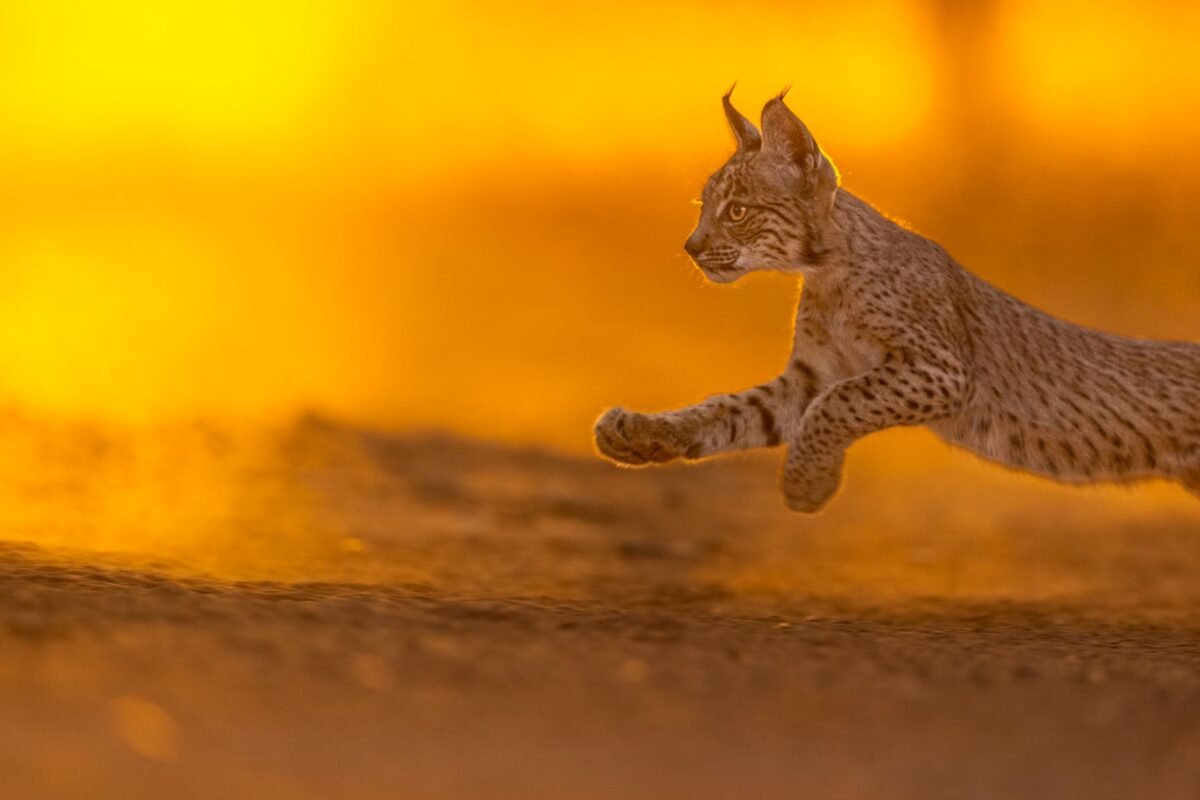
Photo: Bharath Kumar Venkatesh, via Pexels
Sources
- NextWorld News, “Iberian lynx: 2,663 counted as extinction risk recedes”, 26 October 2026, https://www.nextworld-news.com/en/planet/biodiversity/iberian-lynx-pulled-back-from-extinction/
- Panthera, “Small Cat Spotlight: Iberian Lynx”, https://panthera.org/blog-post/small-cat-spotlight-iberian-lynx
- Rewilding Europe, “A tale of two cats: making space for the lynx in Europe”, https://rewildingeurope.com/news/a-tale-of-two-cats-making-space-for-the-lynx-in-europe/
- The European Correspondent, “We brought back the lynx, but will we save the rest?”, October 2026, https://europeancorrespondent.com/en/r/we-brought-back-the-lynx-but-will-we-save-the-rest
Leave a comment
Comment as a guest and verify your email, or sign in or create a reader account. Guest comments reach our review queue after email verification; account holders can submit directly for review.