Listen to this article
Take the story with you. Choose a voice and a pace that suits you.
Getting your device voices ready…
The voice follows the displayed language and your browser’s regional preference when available. You can choose another narration voice.
EU nature restoration plans were supposed to arrive together, on a single deadline, and turn a landmark law into maps, measures and budgets. They didn’t. In a European Parliament debate reported on 8 October 2026, MEPs said only nine of the 27 member states had submitted a draft plan by the deadline, and Environment Commissioner Jessika Roswall confirmed some countries had missed it without giving an exact number (EU Perspectives). A law can be historic and still stall at the filing stage.
The law itself is not vague. What is missing, so far, is follow-through — and, oddly, spending. Money already set aside for nature is sitting largely untouched while politicians argue that restoration costs too much. Information verified through 23 October 2026.
What the national restoration plans deadline 2026 was meant to deliver
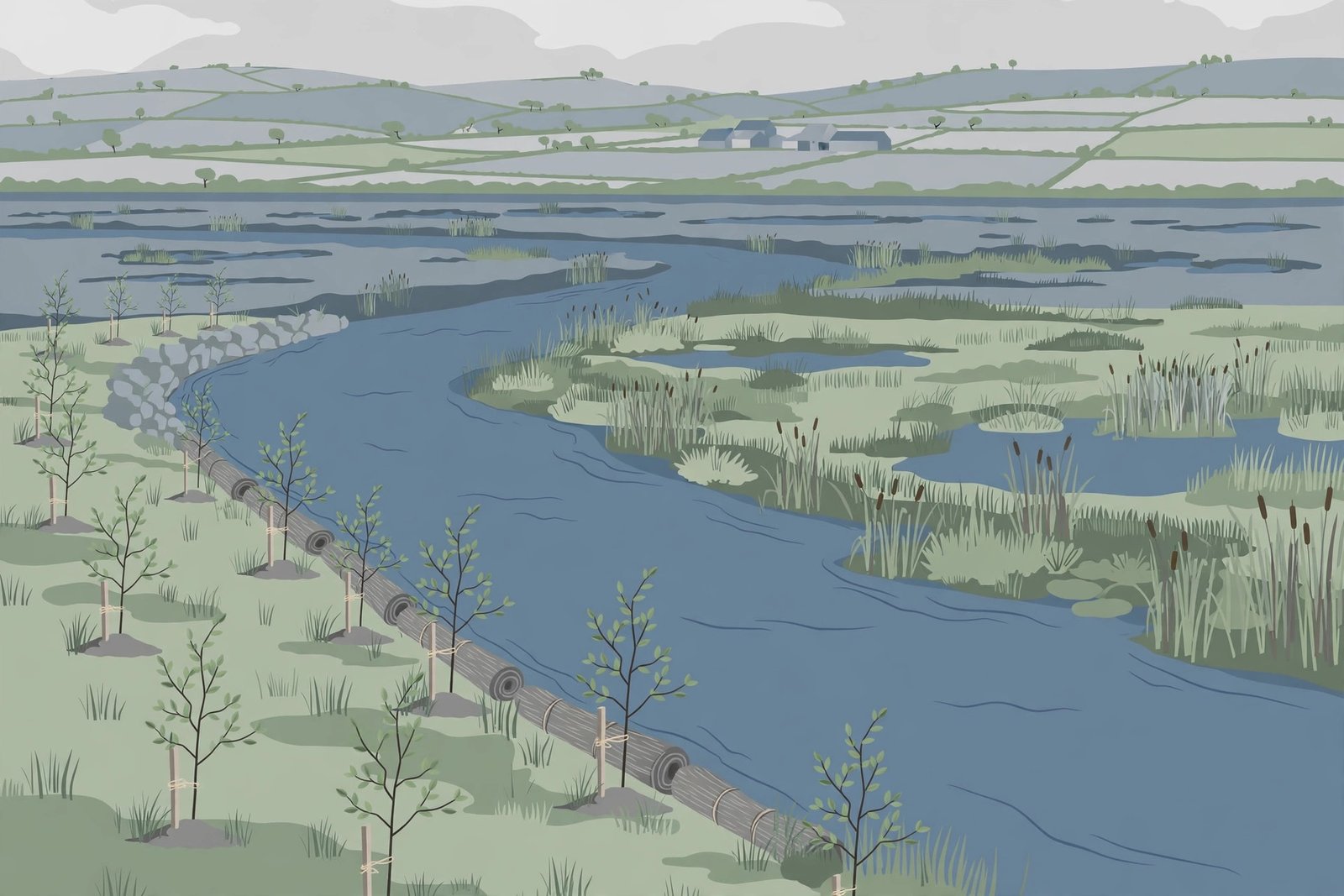
The national restoration plans deadline 2026 — 1 September — was the first hard test of the Nature Restoration Regulation, which entered into force on 18 August 2024 (European Commission). Each country was to show how it will restore degraded land and sea, what measures it will use, and how it will pay for them.
The targets behind those plans are binding. Restoration measures should cover at least 20% of the EU’s land and sea areas by 2030, and ultimately all ecosystems in need of restoration by 2050. The Commission lists specific aims too: reversing pollinator decline by 2030, no net loss of urban green space and tree cover by 2030, and at least 25,000 km of rivers restored to free-flowing state by 2030 (European Commission).
The starting point explains the urgency. More than 80% of habitats in the EU are in poor condition — the Commission puts the figure at 81% — and one in three bee and butterfly species is in decline. The Commission reviews each draft within six months and sends observations back; final plans are expected around September 2027, with progress tracked by the European Environment Agency (Green Earth summary of the process).
Late plans don’t just slip a date. They compress everything after it.
The nature restoration law funding gap is two arguments at once
Talk about the nature restoration law funding gap and you hear two claims that sound contradictory. Both were aired in the same debate.
First claim: there isn’t enough money. MEPs warned restoration needs more support, and Irish MEP Luke Ming Flanagan put it bluntly: “How can this work if we’re not going to pay for it?” (EU Perspectives). Brussels wants at least 35% of the next long-term budget, for 2028–2034, to support climate and environmental goals, but that budget is still under negotiation and would cover far more than restoration alone.
Second claim: the money that exists isn’t being used. Roswall told MEPs the EU had allocated €6.5 billion from regional funds to nature, biodiversity and Natura 2000, its protected-site network — and countries have spent only 15% of it so far, according to EU Perspectives’ report of her remarks. The Commission did not explain why spending has been so low.
Hold those together. A shortage of future funding and a pile of unspent current funding can both be true. Plans are late, projects take time to design, and landowners need certainty before they sign up. None of that resolves itself while the plans are missing.
The economics cut the other way from the cost warnings. Every €1 invested in nature restoration returns €4 to €38 in benefits, according to the Commission (European Commission). Flood protection, cleaner water, pollination — nature does that work for free when it’s healthy, and expensively, through engineers and insurers, when it isn’t.
Why EU nature funds remain unspent while farmers fear the costs
So why EU nature funds remain unspent is partly a design question and partly a trust question. In the Parliament debate, some MEPs argued restoration measures are costly for farmers and private forest owners, could limit land use, and could cut food production or timber output. Others asked for flexibility, or for delays (EU Perspectives).
Herbert Dorfmann argued national and regional authorities should control projects because local authorities understand their landscapes. Opponents of reopening the law answered that restoration can benefit farms directly — better water quality, healthier soil, less damage from droughts, floods and wildfires. Roswall made the Commission’s version of that case: restoring nature does not necessarily mean taking land out of farming, and cities can add green space while still building housing.
WWF, ahead of the UN biodiversity conference COP17 in Yerevan from 19 to 30 October, urged the EU to implement and fund existing nature laws, deliver credible and science-based national restoration plans, and align agriculture, food, infrastructure, energy and finance with biodiversity goals (WWF via EUbusiness). Its point was about credibility: calling for faster global action while domestic plans slip invites an obvious reply.
Analysis: the fight is not really nature versus farming. It’s about who chooses the measures, who bears the short-term cost, and who gets believed when they promise the long-term gain. Until plans name places, measures and payments clearly, farmers hear risk and treasuries hear an open-ended bill — and the €6.5 billion keeps sitting there, 85% unspent, while the 2030 target gets four planting seasons closer.
Sources
- https://euperspectives.eu/2026/10/eu-nature-restoration-plans-fall-behind-as-funding-dispute-grows/
- https://environment.ec.europa.eu/topics/nature-and-biodiversity/nature-restoration-regulation_en
- https://www.green.earth/news/eu-nature-restoration-plans-due-1-september
- https://www.eubusiness.com/environment/wwf-urges-eu-to-maintain-its-nature-ambitions-at-biodiversity-cop-and-at-home/
Leave a comment
Comment as a guest and verify your email, or sign in or create a reader account. Guest comments reach our review queue after email verification; account holders can submit directly for review.